Fasting Rules

Meat not allowed Meat Abstain
Fish not allowed Fish Abstain
Dairy not allowed Dairy Abstain
Oil not allowed Oil Abstain
Wine not allowed Wine Abstain

Saints & Commemorations

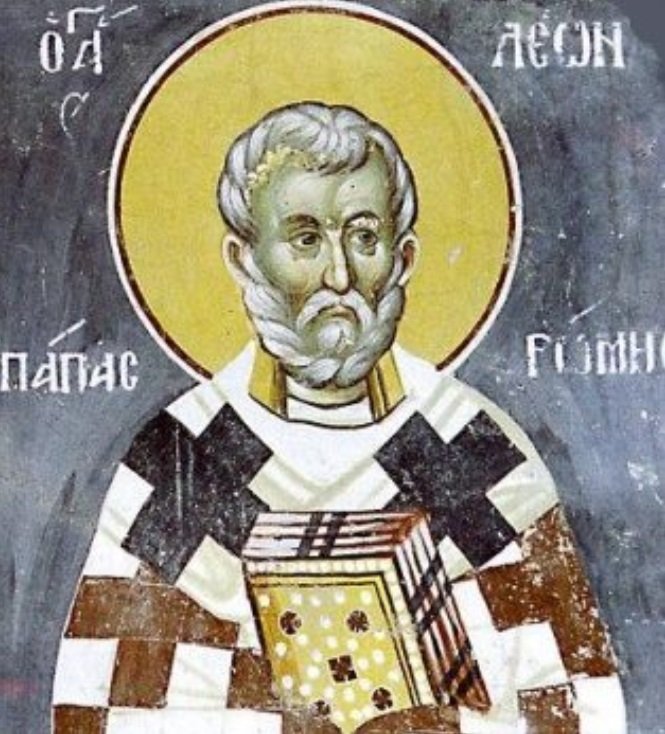
Saint Leo the Great, Pope of Rome

Saint Leo the Great, Pope of Rome

Saint Leo I the Great, Pope of Rome (440-461), received a fine and diverse education, which opened for him the possibility of an excellent worldly career. He yearned for the spiritual life, however, and so he chose the path of becoming an archdeacon under holy Pope Sixtus III (432-440), after whose death Saint Leo was chosen as Bishop of Rome in September 440. Saint Leo I the Great, Pope of Rome (440-461), received a fine and diverse education, which opened for him the possibility of an excellent worldly career. He yearned for the spiritual life, however, and so he chose the path of becoming an archdeacon under holy Pope Sixtus III (432-440), after whose death Saint Leo was chosen as Bishop of Rome in September 440. These were difficult times for the Church, when heretics assaulted Orthodoxy with their false teachings. Saint Leo combined pastoral solicitude and goodness with an unshakable firmness in the confession of the Faith. He was in particular one of the basic defenders of Orthodoxy against the heresies of Eutyches and Dioscorus, who taught that there was only one nature in the Lord Jesus Christ. He was also a defender against the heresy of Nestorius. He exerted all his influence to put an end to the unrest by the heretics in the Church, and by his letters to the holy emperors Theodosius II (408-450) and Marcian (450-457), he actively promoted the convening of the Fourth Ecumenical Council, at Chalcedon in 451, to condemn the heresy of the Monophysites. At the Council at Chalcedon, at which 630 bishops were present, a letter of Saint Leo to the deceased Saint Flavian, Patriarch of Constantinople (447-449) was read. Saint Flavian had suffered for Orthodoxy under the “Robber Council” of Ephesus in the year 449. In the letter of Saint Leo the Orthodox teaching about the two natures [the divine and the human] in the Lord Jesus Christ was set forth. All the bishops present at the Council were in agreement with this teaching, and so the heretics Eutyches and Dioscorus were excommunicated from the Church. Saint Leo was also a defender of his country against the incursions of barbarians. In 452, by the persuasive power of his words, he stopped Attila the Hun from pillaging Italy. Again in the year 455, when the leader of the Vandals [a Germanic tribe], Henzerich, turned towards Rome, he persuaded him not to pillage the city, burn buildings, nor to spill blood. He knew the time of his death beforehand, and he prepared himself, with forty days of fasting and prayer, to pass from this world into eternity. He died in the year 461 and was buried at Rome. His literary and theological legacy is comprised of 96 sermons and 143 letters, of which the best known is his Epistle to Saint Flavian.

Troparion - Tone 3

You were the Church’s instrument / in strengthening the teaching of true doctrine; / you shone forth from the West like a sun dispelling the errors of the heretics. / Righteous Leo, entreat Christ God to grant us His great mercy.

Kontakion - Tone 3

O Champion of Orthodoxy, and teacher of holiness, / the enlightenment of the universe and the inspired glory of true believers. / O most wise Father Leo, your teachings are as music of the Holy Spirit for us! / Pray that Christ our God may save our souls!
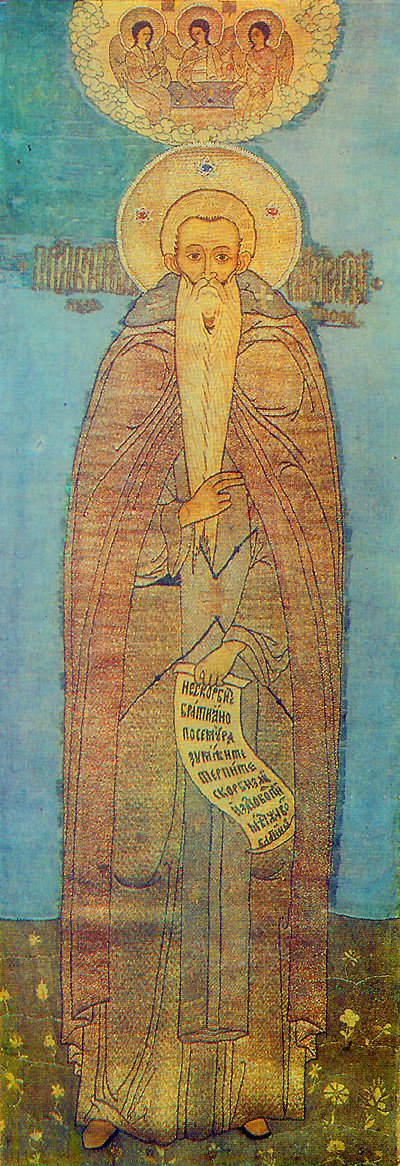
Venerable Cosmas of Yakhrom

Venerable Cosmas of Yakhrom

Saint Cosmas of Yakhrom was the servant of a certain Boyar, whom he comforted during his long illness by reading to him from books. And so, travelling from town to town, they happened to stop at the Yakhrom River. Exhausted by their long journey, they fell into a sound sleep. Suddenly, Cosmas was awakened by a vision of extraordinary light. Saint Cosmas of Yakhrom was the servant of a certain Boyar, whom he comforted during his long illness by reading to him from books. And so, travelling from town to town, they happened to stop at the Yakhrom River. Exhausted by their long journey, they fell into a sound sleep. Suddenly, Cosmas was awakened by a vision of extraordinary light. In a tree, Cosmas saw an icon of the Dormition of the Most Holy Theotokos, and he heard a mysterious voice say: "Pay attention, Cosmas, and understand the words of life. Lead a God-pleasing life and seek the joy of the righteous, so that you may receive eternal blessings.” The voice also commanded him to become a monk and to build a monastery. Reverently, he took the Icon of the Mother of God and brought it to his sick master. As soon as it was placed on the old man, he was healed of his infirmity. When his term of servitude expired, Saint Cosmas went to the Kiev Caves Lavra. After giving the Icon to the brethren, he was tonsured in that Monastery. After he was tonsured, he astonished even experienced monks by his asceticism. The Saint contested there for many years, and then he had a vision of an Angel telling him to leave the Lavra and to take with him the Icon of the Mother of God which had appeared to him. He asked the monks for the Icon, and left Kiev, arriving at the place where the wonderworking Icon had appeared to him. There, with the help of some pious donors, he built a temple dedicated to the Dormition of the Mother of God. He remained at the church, engaging in various monastic struggles which he had imposed on himself. Disciples began to gather around the Saint, a Monastery was established, and Saint Cosmas was chosen as its Igoumen. During this time, word of his ascetic struggles even reached the ears of the Great Prince. Saint Cosmas reposed at an advanced age on February 18, 1492, and was buried in the Monastery which he founded. He is also commemorated on October 14, the Feast of the Yakhrom Icon of the Mother of God. 1 1 Many sources indicate that it was an icon of the Dormition of the Most Holy Theotokos which appeared to Saint Cosmas, but only a reputed copy of the Icon has been preserved, which depicts the Mother of God according to the "Tenderness" category of Russian icons.

Troparion - Tone 8

By a flood of tears you made the desert fertile, / and your longing for God brought forth fruits in abundance. / By the radiance of miracles you illumined the whole universe! / O our holy father Cosmas, pray to Christ our God to save our souls!
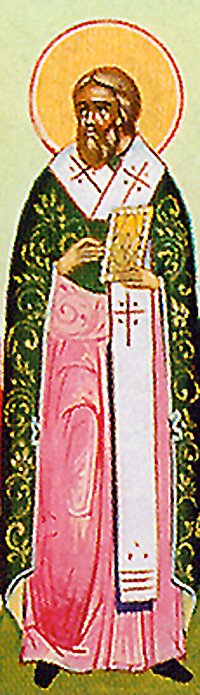
Saint Agapitos the Confessor and Wonderworker, Bishop of Synnada in Phrygia

Saint Agapitos the Confessor and Wonderworker, Bishop of Synnada in Phrygia

Saint Agapitos came from Cappadocia and was the son of pious and God-loving parents. He lived during the time of the emperors Diocletian (284-305) and Maximian (285-305). At a young age he departed for a monastery near Synnada in Phrygia, where he became a monk. He was loved by the Igumen because of his virtuous life and so he was taught how to read and write. Saint Agapitos came from Cappadocia and was the son of pious and God-loving parents. He lived during the time of the emperors Diocletian (284-305) and Maximian (285-305). At a young age he departed for a monastery near Synnada in Phrygia, where he became a monk. He was loved by the Igumen because of his virtuous life and so he was taught how to read and write. He also received from God the gift of working miracles, performing over a hundred of them. By his prayers he killed a great dragon, which had appeared near the monastery, carrying off both people and animals. This was a great benefit for those who had turned to him for help. Later on, during the reign of Licinius (308-323) Saint Agapitos was recruited into the army against his will. There he saw the victorious Martyrs Victor, Dorotheos, Theodoulos, Agrippa and many others, being tortured for their faith in Christ. Right away he wanted to join them in their martyrdom. Though they were perfected in Christ by the sword, he was preserved and, by God's providence, he suffered no harm, even though they wounded him with a spear. His life was spared so that he might lead many to salvation. The holy Emperor Constantine the Great (May 21) heard that Saint Agapitos could heal people by his prayers. The emperor sent him a sick servant, and he was cured. Saint Constantine wished to reward Saint Agapitos, but he asked only that he be discharged from military service and be permitted to return to his monastery. His request was granted, and so he went back to the monastery. Saint Agapitos devoted himself to the study of the Holy Gospel, and the Bishop of Synnada ordained him to the holy priesthood. After the bishop reposed, Saint Agapitos was chosen to succeed him in this position by the common consent of the clergy and the people. After governing his flock in a God-pleasing manner, instructing them in the Orthodox Faith, and in virtuous living, Saint Agapitos reposed in peace

Troparion - Tone 8

Champion of Orthodoxy, teacher of purity and of true worship, / the enlightener of the universe and the adornment of hierarchs: / all-wise father Agapitos, your teachings have gleamed with light upon all things. / Intercede before Christ God to save our souls.
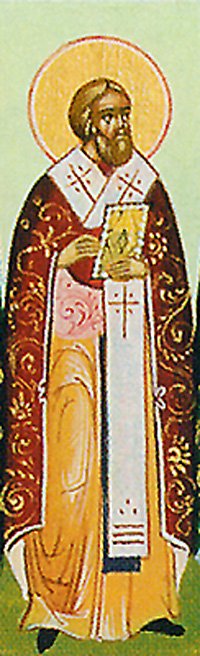
Saint Flavian the Confessor, Patriarch of Constantinople

Saint Flavian the Confessor, Patriarch of Constantinople

Saint Flavian the Confessor, Patriarch of Constantinople, occupied the patriarchal throne of Constantinople under the holy Emperor Theodosius the Younger (408-450) and his sister the holy Empress Pulcheria (September 10). At first he was a presbyter and caretaker of church-vessels in the cathedral. He became Patriarch after the death of holy Patriarch Proclus (November 20). Saint Flavian the Confessor, Patriarch of Constantinople, occupied the patriarchal throne of Constantinople under the holy Emperor Theodosius the Younger (408-450) and his sister the holy Empress Pulcheria (September 10). At first he was a presbyter and caretaker of church-vessels in the cathedral. He became Patriarch after the death of holy Patriarch Proclus (November 20). During this time, various disturbances and heresies threatened church unity. In the year 448, Saint Flavian convened a local Council at Constantinople to examine the heresy of Eutyches, which admitted only one nature (the divine) in the Lord Jesus Christ. Persisting in his error, the heretic Eutyches was excommunicated from the Church and deprived of dignity, but Eutyches had a powerful patron in the person of Chrysathios, a eunuch close to the emperor. Through intrigue Chrysathios brought Bishop Dioscorus of Alexandria over to the side of Eutyches, and obtained permission from the emperor to convene a church council at Ephesus, afterwards known as the “Robber Council.” Dioscorus presided at this council, gaining the acquittal of Eutyches and the condemnation of Patriarch Flavian by threats and force. Saint Flavian was fiercely beaten up during the sessions of this council by impudent monks led by a certain Barsumas. Even the impious president of the Robber Council, the heretic Dioscorus, took part in these beatings. After this heavy chains were put upon Saint Flavian, and he was sentenced to banishment at Ephesus. The Lord, however, ended his further suffering, by sending him his death (+ August 449). The holy Empress Pulcheria withdrew from the imperial court. Soon the intrigues of Chrysathios were revealed. The emperor dismissed him, and restored his sister Saint Pulcheria. Through her efforts, the relics of holy Patriarch Flavian were reverently transferred from Ephesus to Constantinople.

Troparion - Tone 8

Champion of Orthodoxy, teacher of purity and of true worship, / the enlightener of the universe and the adornment of hierarchs: / all-wise father Flavian, your teachings have gleamed with light upon all things. / Intercede before Christ God to save our souls.
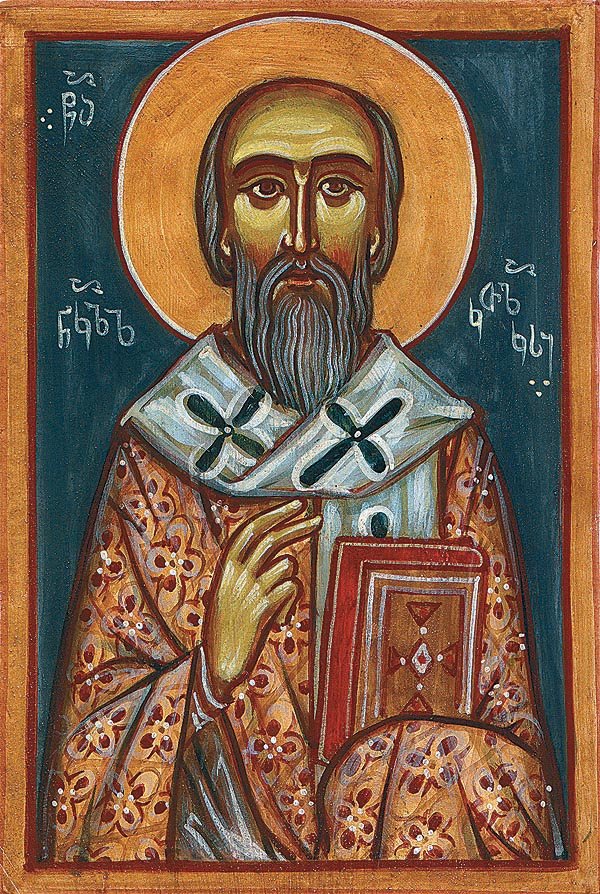
Saint Nicholas, Catholicos of Georgia

Saint Nicholas, Catholicos of Georgia

Nicholas Batonishvili was the son of Levan I, King of Kakheti (1520-1574). He lived during the grievous period of the Persian invasion of eastern Georgia. The young prince chose the path of monastic life and bravely helped his elder brother, King Alexandre II (1574-1605). Despite his royal blood, he preferred the monk’s habit and the sweet, light yoke of Christ to the glamour and opulence of his inheritance. Nicholas Batonishvili was the son of Levan I, King of Kakheti (1520-1574). He lived during the grievous period of the Persian invasion of eastern Georgia. The young prince chose the path of monastic life and bravely helped his elder brother, King Alexandre II (1574-1605). Despite his royal blood, he preferred the monk’s habit and the sweet, light yoke of Christ to the glamour and opulence of his inheritance. According to God’s will, Nicholas was enthroned as Catholicos of All Georgia. The Georgian chronicle Life of Kartli (Kartlis Tskhovreba) relates the date of his enthronement as Saturday, February 28, 1584. Armed with the highest hierarchical rank, royal blood, and personal integrity, Catholicos Nicholas was an exemplary leader for the Georgian nation. He struggled to plant the seeds of Christian love between countries of like faith. He corresponded with Patriarch Job of Russia (1586-1590) and even sent him a horse. He also donated a leather-bound illuminated manuscript of the Gospels, copied in 1049, to the Metekhi Church of the Theotokos. In his book Pilgrimage , the renowned eighteenth-century historian Archbishop Timote (Gabashvili) reports that there is an icon of Holy Catholicos Nicholas hanging in the refectory at the Ivḗron Monastery on Mt. Athos. Bishop Timote also describes another refectory, built by Ashotan Mukhran-Batoni, and notes, “There, I believe, Catholicos Nicholas Batonishvili reposed.”

Troparion - Tone 4

In truth you were revealed to your flock as a rule of faith, / an image of humility and a teacher of abstinence; / your humility exalted you; / your poverty enriched you. / Hierarch Father Nicholas, / entreat Christ our God / that our souls may be saved.

Saint Theodore (Komogovin) of Serbia

No information available at this time.
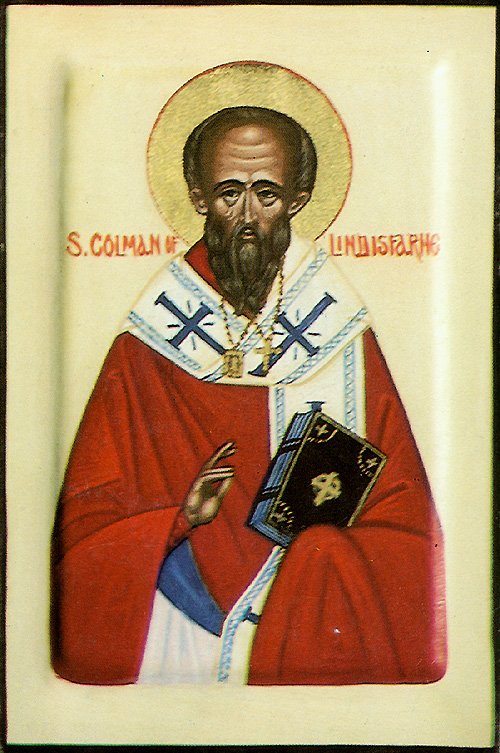
Saint Colman of Lindesfarne

Saint Colman of Lindesfarne

No information available at this time.

Troparion - Tone 4

In truth you were revealed to your flock as a rule of faith, / an image of humility and a teacher of abstinence; / your humility exalted you; / your poverty enriched you. / Hierarch Father Colman, / entreat Christ our God / that our souls may be saved.

Scripture Readings

View scripture readings for this date on OCA.org.

View readings on OCA.org

Liturgical data sourced from OCA.org and orthocal.info