Fasting Rules

Meat not allowed Meat Abstain
Fish not allowed Fish Abstain
Dairy not allowed Dairy Abstain
Oil not allowed Oil Abstain
Wine not allowed Wine Abstain

Saints & Commemorations

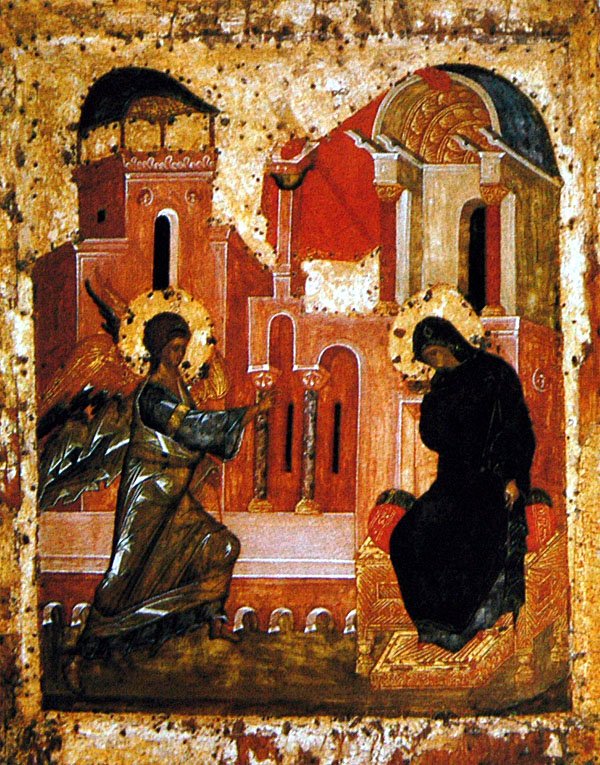
Leavetaking of the Annunciation

Leavetaking of the Annunciation

On the Leavetaking of the Feast of the Annunciation, the Church commemorates the Archangel Gabriel, who announced the great mystery of the Incarnation of Christ to the Virgin Mary. There is no period of Afterfeast due to Great Lent.

Troparion - Tone 4

Today is the beginning of our salvation, / the revelation of the eternal mystery! / The Son of God becomes the Son of the Virgin / as Gabriel announces the coming of Grace. / Together with him let us cry to the Theotokos: / Rejoice, O Full of Grace, / the Lord is with You!

Kontakion - Tone 8

O Victorious Leader of Triumphant Hosts! / We, your servants, delivered from evil, sing our grateful thanks to you, O Theotokos! / As you possess invincible might, set us free from every calamity / so that we may sing: Rejoice, O unwedded Bride!
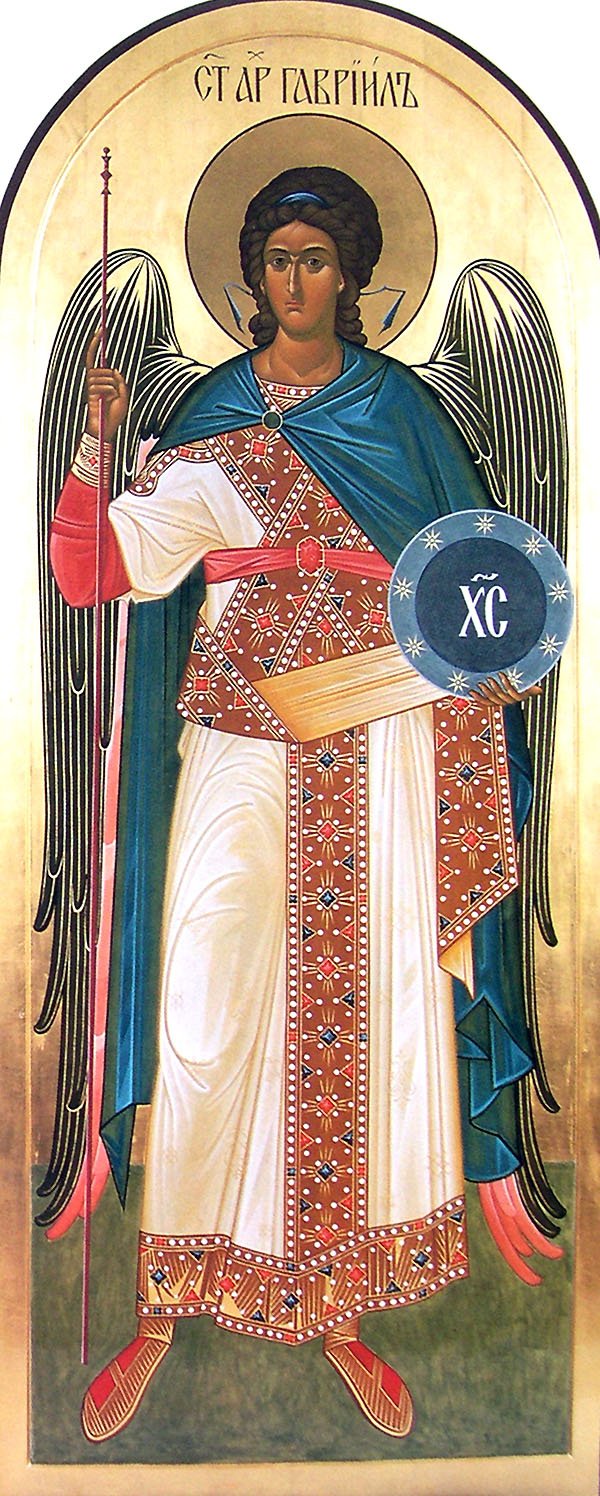
Synaxis of the Archangel Gabriel

Synaxis of the Archangel Gabriel

The Archangel Gabriel was chosen by the Lord to announce to the Virgin Mary about the Incarnation of the Son of God from Her, to the great rejoicing of all mankind. Therefore, on the day after the Feast of the Annunciation, the day on which the All-Pure Virgin is glorified, we give thanks to the Lord and we venerate His messenger Gabriel, who contributed to the mystery of our salvation. The Archangel Gabriel was chosen by the Lord to announce to the Virgin Mary about the Incarnation of the Son of God from Her, to the great rejoicing of all mankind. Therefore, on the day after the Feast of the Annunciation, the day on which the All-Pure Virgin is glorified, we give thanks to the Lord and we venerate His messenger Gabriel, who contributed to the mystery of our salvation. Gabriel, the holy Archistrategos (Leader of the Heavenly Hosts), is a faithful servant of the Almighty God. He announced the future Incarnation of the Son of God to those of the Old Testament; he inspired the Prophet Moses to write the Pentateuch (first five books of the Old Testament), he announced the coming tribulations of the Chosen People to the Prophet Daniel (Dan. 8:16, 9:21-24); he appeared to Saint Anna (July 25) with the news that she would give birth to the Virgin Mary. The holy Archangel Gabriel remained with the Holy Virgin Mary when She was a child in the Temple of Jerusalem, and watched over Her throughout Her earthly life. He appeared to the Priest Zachariah, foretelling the birth of the Forerunner of the Lord, Saint John the Baptist. The Lord sent him to Saint Joseph the Betrothed in a dream, to reveal to him the mystery of the Incarnation of the Son of God from the All-Pure Virgin Mary, and warned him of the wicked intentions of Herod, ordering him to flee into Egypt with the divine Infant and His Mother. When the Lord prayed in the Garden of Gethsemane before His Passion, the Archangel Gabriel, whose very name signifies “Man of God” (Luke. 22:43), was sent from Heaven to strengthen Him. The Myrrh-Bearing Women heard from the Archangel the joyous news of Christ’s Resurrection (Mt.28:1-7, Mark 16:1-8). Mindful of the manifold appearances of the holy Archangel Gabriel and of his zealous fulfilling of God’s will, and confessing his intercession for Christians before the Lord, the Orthodox Church calls upon its children to pray to the great Archangel with faith and love. The Synaxis of the Holy Archangel Gabriel is also celebrated on July 13. All the angels are commemorated on November 8.

Troparion - Tone 4

Gabriel, commander of the heavenly hosts, / we who are unworthy beseech you, / by your prayers encompass us beneath the wings of your immaterial glory, / and faithfully preserve us who fall down and cry to you: / “Deliver us from all harm, for you are the commander of the powers on high!”

Kontakion - Tone 8

Supreme commander Gabriel, / you are the glorious intercessor and servant / before the all-radiant, worthy, all-powerful, infinite and awesome Trinity. / Ever pray now that we may be delivered from all tribulations and torments, / so that we may cry out to you: / “Rejoice, protection of your servants!”

Hieromartyr Irenaeus, Bishop of Sirmium

Hieromartyr Irenaeus suffered during the persecution against Christians under the Roman emperors Diocletian and Maximian (284-305). He was a presbyter, and he and his wife raised their children in Christian piety. Saint Irenaeus was greatly respected for his education and strict manner of life. He was later made Bishop of Sirmium in Pannonia. Hieromartyr Irenaeus suffered during the persecution against Christians under the Roman emperors Diocletian and Maximian (284-305). He was a presbyter, and he and his wife raised their children in Christian piety. Saint Irenaeus was greatly respected for his education and strict manner of life. He was later made Bishop of Sirmium in Pannonia. Because of his fervent preaching of the Gospel he was arrested and brought before an official named Probus. Refusing to deny Christ and offer sacrifice to the pagan gods, the saint was handed over for torture. Witnessing his torments were the saint’s parents, relatives and friends, who attempted to persuade him to submit, but the martyr remained steadfast. After cruel tortures, the holy confessor spent a long time in prison. Probus tried to persuade the martyr, urging him to spare his life for the sake of his sons. Saint Irenaeus replied, “My sons believe in God, Who will care for them. As for me, nothing will force me to renounce my Christ.” The governor ordered the saint to be thrown into a river. They led the martyr on the bridge crossing the River Savva, where he knelt and prayed to the Lord for his flock. Then they beheaded the Hieromartyr Irenaeus, and threw his body into the river.

Troparion - Tone 4

By sharing in the ways of the Apostles, / you became a successor to their throne. / Through the practice of virtue, you found the way to divine contemplation, O inspired one of God; / by teaching the word of truth without error, you defended the Faith, / even to the shedding of your blood. / Hieromartyr Irenaeus, entreat Christ God to save our souls.

26 Martyrs in the Crimea

Presbyter Bercus; Monk Arpilus; laymen and women Abibus, Agnus, Reasus, Igathrax, Iscoeus (Iskous), Silas, Signicus, Sonirilus, Suimbalus, Thermus, Phillus (Philgas), Bathusius, Anna, Alla, Larissa, Monco (Manca), Uirko (Virko), Animais (Animaida), Queen Gaatha, and Princess Duklida, were among twenty-six martyrs who were killed by the Goths around the year 375 under Jungerich, a persecutor of Christians. Presbyter Bercus; Monk Arpilus; laymen and women Abibus, Agnus, Reasus, Igathrax, Iscoeus (Iskous), Silas, Signicus, Sonirilus, Suimbalus, Thermus, Phillus (Philgas), Bathusius, Anna, Alla, Larissa, Monco (Manca), Uirko (Virko), Animais (Animaida), Queen Gaatha, and Princess Duklida, were among twenty-six martyrs who were killed by the Goths around the year 375 under Jungerich, a persecutor of Christians. Ancient synaxaria of the Gothic Church recount the martyrdom of twenty-six Christians in the time of the emperors Valentinian, Valens, and Gratian. The historian Sozomen says that King Athanaric was enraged to see his subjects embracing Christianity because of the preaching of the Arian bishop Ulfilas. So, he ordered many of them to be tortured and executed, often without a trial. King Athanaric’s ministers placed a statue in a chariot and paraded it before the tents which Christians used for church services. Those who worshiped the idol and offered sacrifice were spared, the rest were burned alive in the tent. Jungerich gave orders to burn down a church during divine services. In the fiery inferno 308 people perished, of whom only twenty-one are known by name. There was also an anonymous man who came to the tent and confessed Christ. He was martyred with the others. Different manuscripts give variants of their names. In the reign of Valentinian and Theodosius (383-392), the Gothic king’s widow Gaatha (who was an Orthodox Christian) and her daughter Duclida gathered up the relics of the holy martyrs and brought them to Syria with the help of some priests and a layman named Thyellas. Gaatha later returned to her native land, where she was stoned and died as a martyr, along with her son Agathon. The relics of the holy martyrs were left to Duclida, who went to Cyzicus in Asia Minor and gave some of the relics for the founding of a church. Saint Duclida died in peace. The holy martyrs were commemorated on October 23 on the Gothic calendars.

Troparion - Tone 4

Your holy martyrs O Lord, / through their sufferings have received incorruptible crowns from You, our God. / For having Your strength, they laid low their adversaries, / and shattered the powerless boldness of demons. / Through their intercessions, save our souls!

Saint Malchus of Chalcis, Syria

Saint Malchus was the only son of a farmer, and lived near Antioch, Syria. Upon his attaining the age of maturity, his parents had arranged a marriage for him, but Malchus secretly left home and received monastic tonsure in one of the monasteries, where he fulfilled various obediences for many years. Saint Malchus was the only son of a farmer, and lived near Antioch, Syria. Upon his attaining the age of maturity, his parents had arranged a marriage for him, but Malchus secretly left home and received monastic tonsure in one of the monasteries, where he fulfilled various obediences for many years. Upon learning of the death of his father, he wished to visit his mother. The igumen of the monastery would not bless him to go, but Malchus disobeyed him. He joined a group of pilgrims, and set out for his native district. Along the way, Saracens attacked them, and enslaved them. Malchus’ s master compelled him to marry one of his slaves. With the consent of his wife, Saint Malchus kept his vow of chastity, and eventually converted her to Christianity. One day, Saint Malchus and his wife ran away. The master pursued them, but they hid in a cave, which proved to be the den of a lioness. The lioness did not harm the fugitives, but killed one of the pursuers who tried to enter the cave and capture them. Saint Malchus sent his wife to a women’s monastery as she requested, while he returned to his own monastery. By then the igumen was no longer alive, and Saint Malchus never left the monastery again. For the edification of monks he often recounted his trials, which were the result of his disobedience. Saint Malchus labored in asceticism in the monastery until the end of his life. He died in peace in the fourth century.

Troparion - Tone 8

In you the image was preserved with exactness, O Father, / for taking up your cross, you followed after Christ. / By so doing, you taught us to disregard the flesh, for it passes away, / but to care instead for the soul, since it is immortal. / Therefore, most venerable Father Malchus your spirit rejoices with the Angels.

Venerable Basil the New, Anchorite, Near Constantinople

Saint Basil the New left the world in his youth, and struggled in a desolate place. Once, courtiers of the Byzantine Emperor were passing by and saw him dressed in rags, and were alarmed by his strange appearance. Suspicious of the holy ascetic, they captured him and brought him to the city, where the patrician Samon questioned him. Saint Basil the New left the world in his youth, and struggled in a desolate place. Once, courtiers of the Byzantine Emperor were passing by and saw him dressed in rags, and were alarmed by his strange appearance. Suspicious of the holy ascetic, they captured him and brought him to the city, where the patrician Samon questioned him. When asked who he was, the saint merely said that he was a stranger in the land. They subjected the monk to terrible tortures, but he endured it in silence, not wishing to reveal the details of his ascetic life to them. Samon lost his patience and asked Saint Basil, “Impious one, how long will you hide, who are you, and from where do you come?” The saint replied, “It is more appropriate to call impious those who, like yourself, lead a life of impurity.” After his public humiliation, Samon ordered his men to hang the saint upside down with his hands and feet tied. These torments were so cruel that those witnessing them murmured against Samon. When they released the holy ascetic after three days of torture, they found him alive and unharmed. Samon attributed this miracle to sorcery and had Saint Basil thrown to a lion. However, the lion did not touch the saint, and lay peacefully at his feet. Samon ordered Saint Basil to be drowned in the sea, but two dolphins brought him to shore. The saint went into the city, where he met a sick man named John, who was suffering from fever. Saint Basil healed the sick man in the name of the Savior, and accepted John’s invitation to stay in his home. Numerous believers came to the saint for advice and guidance, and also to receive healing from sickness through his prayers. Saint Basil, endowed with the gift of discernment, guided sinners on the path of repentance, and he could predict future events. Among those who visited Saint Basil was a certain Gregory, who became his disciple and later wrote a detailed Life of his teacher. Gregory once found an expensive sash at an inn, which had been dropped by the inn-keeper’s daughter. He hid it on his person, intending to sell it and give the money to the poor. On the way home, he lost the sash and some other things. Saint Basil admonished him in a dream, showed him a broken pot and said, “If anyone steals such a worthless thing, they will be chastized four times over. You hid a valuable sash, and you will be condemned as a thief. You should return what you found.” After the death of Saint Theodora, who had attended Saint Basil, Gregory very much wanted to learn about her life beyond the grave, and he often asked the holy ascetic to reveal this to him. Through the saint’s prayers, Gregory saw Saint Theodora in a dream. She told him how her soul underwent tribulations after death, and how the power of the prayers of Saint Basil had helped her (The Feast Day of Saint Theodora of Constantinople is December 30). Saint Basil died in about the year 944 at the age of 110. The Church calls him Basil the New to distinguish him from other ascetics of the same name.

Troparion - Tone 8

By a flood of tears you made the desert fertile, / and your longing for God brought forth fruits in abundance. / By the radiance of miracles you illumined the whole universe! / O our holy father Basil, pray to Christ our God to save our souls!

Martyr Montanus the Presbyter of Singidunum, and his wife Maxima

Saint Maxima and her priest-husband, Saint Montanus, lived in Singidunum (present-day Belgrade) in the fourth century during the time of Emperor Diocletian’s persecution of Christians. The Emperor’s deputy, Galerius, issued an edict requiring Christians to offer sacrifices to the idols. The pious couple refused, and continued to conduct their lives according to the Gospel of Jesus Christ. The Saint Maxima and her priest-husband, Saint Montanus, lived in Singidunum (present-day Belgrade) in the fourth century during the time of Emperor Diocletian’s persecution of Christians. The Emperor’s deputy, Galerius, issued an edict requiring Christians to offer sacrifices to the idols. The pious couple refused, and continued to conduct their lives according to the Gospel of Jesus Christ. They traveled to the west, to Sirmium, in order to distance themselves from the seat of power. However, in the year 304, they were seized by Roman soldiers and brought to stand trial before Governor Probus. As they stood before the governor on a bridge overlooking the Savva River, the captives were given the choice of sacrifice to the idols or death. Saint Montanus showed great heroism and explained that if he were to sacrifice to the idols, it would be tantamount to rejecting Jesus Christ as God and Lord of heaven and earth, and he refused to comply. Frustrated, Probus tried to persuade Saint Maxima to deny Christ. Much to the surprise of the crowd, her fidelity and apostolic courage proved to be as great, if not greater, than her husband’s. Saint Maxima defended her faith so convincingly and with such eloquent zeal that Probus cut the trial short, fearing mass conversions to Christianity. Saints Maxima and Montanus were beheaded by the sword, and their remains were thrown into the Savva River. The faithful, and those converted by the zeal of the holy couple, willingly endangered their lives in order to rescue the bodies and heads of the martyrs from the river. The relics were transported to Rome and interred in the Catacombs of Saint Priscilla on the Salarian Way where they remained for 1,500 years.

Troparion - Tone 3

Your holy martyrs Montanus and Maxima, O Lord, / through their sufferings have received incorruptible crowns from You, our God. / For having Your strength, they laid low their adversaries, / and shattered the powerless boldness of demons. / Through their intercessions, save our souls!

New Martyr George of Sofia

Saint George came from Sofia, Bulgaria, and was a soldier who served in the Ottoman army along with some other Christians. In March of 1437, he was stationed in Adrianople, in Thrace. One day, when he took his bow to be repaired, he overheard some Muslim soldiers mocking Christ. George became angry and declared, “Only One is holy, One is Lord, only One is worshiped - Jesus Christ, to the glory of God the Father. ” Saint George came from Sofia, Bulgaria, and was a soldier who served in the Ottoman army along with some other Christians. In March of 1437, he was stationed in Adrianople, in Thrace. One day, when he took his bow to be repaired, he overheard some Muslim soldiers mocking Christ. George became angry and declared, “Only One is holy, One is Lord, only One is worshiped - Jesus Christ, to the glory of God the Father. ” He also said some rather unflattering things about their beliefs. Of course, this enraged the Muslims, who attacked George and punched him in the face. The saint did not keep quiet, but repeated his previous statement in an even louder voice. He was seized by the Muslims, who tied a bow string around his neck. His hands were bound and then he was brought before the ruler. When the ruler asked if he had said the things which his accusers had reported to him, George admitted that this was true, and then he said similar things to the ruler. After receiving a beating, George was sent to another official. Once again, he was asked the same questions and he gave the same responses. The crowd became angry and demanded that George be punished. The martyr became somewhat apprehensive, but replied, “What good would it do to deny the truth? Yes, I did say all the things you heard. ” One of the officials ordered him to take back what he said, and to become a Muslim, promising him honors and many gifts if he did. Courageously, George reiterated his faith in Christ and refused to convert. The crowd began to call for his death, but the ruler said that he would decide what to do with him. As George was led to the prison, he was beaten and spat upon, but he remained calm. When he arrived at the prison he was mocked and tortured, but he bore these things with great patience. The next day some of their religious leaders arrived and ordered George to be brought before them. The saint did not seem to be afraid, but rather joyful, as he bore witness to Christ and mocked their faith. One of the leaders suggested that under their law George deserved to be beaten, but not put to death. The crowd began shouting for him burned by fire, so the frightened officials turned him over to the mob. A fire was prepared, and George approached it bravely, knowing that those who kill the body cannot kill the soul (Matthew 10:28). Again they promised George great rewards if he would accept their faith, but he refused. He was placed into a basket and it was put on the fire. As the basket caught fire, someone stabbed him in the stomach with a spear so that his intestines fell out. More fuel was added to the flames, which burned from five o’clock in the afternoon until dawn. The saint’s body was almost completely reduced to dust, which the Muslims scattered so that the Christians would not be able to gather it. For some days following Saint George’s martyrdom, various forms of light appeared at the place of execution. This light took the form of a flame, a beam, etc. The holy New Martyr George suffered for Christ on Tuesday March 26, 1437, at the age of thirty, thereby receiving an incorruptible crown of glory from Christ God, Who is worshiped and glorified together with the Father and the Holy Spirit throughout all ages. An eyewitness to these events has left a written account, which he declares is accurate and truthful, without any extraneous additions.

Troparion - Tone 3

Your holy martyr George, O Lord, / through his suffering has received an incorruptible crown from You, our God. / For having Your strength, he laid low his adversaries, / and shattered the powerless boldness of demons. / Through his intercessions, save our souls!

Scripture Readings

Epistle

Hebrews 2:11-18

11 For both he that sanctifieth and they who are sanctified are all of one: for which cause he is not ashamed to call them brethren,
12 Saying, I will declare thy name unto my brethren, in the midst of the church will I sing praise unto thee.
13 And again, I will put my trust in him. And again, Behold I and the children which God hath given me.
14 Forasmuch then as the children are partakers of flesh and blood, he also himself likewise took part of the same; that through death he might destroy him that had the power of death, that is, the devil;
15 And deliver them who through fear of death were all their lifetime subject to bondage.
16 For verily he took not on him the nature of angels; but he took on him the seed of Abraham.
17 Wherefore in all things it behoved him to be made like unto his brethren, that he might be a merciful and faithful high priest in things pertaining to God, to make reconciliation for the sins of the people.
18 For in that he himself hath suffered being tempted, he is able to succour them that are tempted.

Gospel

Luke 1:24-38

24 And after those days his wife Elisabeth conceived, and hid herself five months, saying,
25 Thus hath the Lord dealt with me in the days wherein he looked on me, to take away my reproach among men.
26 And in the sixth month the angel Gabriel was sent from God unto a city of Galilee, named Nazareth,
27 To a virgin espoused to a man whose name was Joseph, of the house of David; and the virgin’s name was Mary.
28 And the angel came in unto her, and said, Hail, thou that art highly favoured, the Lord is with thee: blessed art thou among women.
29 And when she saw him, she was troubled at his saying, and cast in her mind what manner of salutation this should be.
30 And the angel said unto her, Fear not, Mary: for thou hast found favour with God.
31 And, behold, thou shalt conceive in thy womb, and bring forth a son, and shalt call his name JESUS.
32 He shall be great, and shall be called the Son of the Highest: and the Lord God shall give unto him the throne of his father David:
33 And he shall reign over the house of Jacob for ever; and of his kingdom there shall be no end.
34 Then said Mary unto the angel, How shall this be, seeing I know not a man?
35 And the angel answered and said unto her, The Holy Ghost shall come upon thee, and the power of the Highest shall overshadow thee: therefore also that holy thing which shall be born of thee shall be called the Son of God.
36 And, behold, thy cousin Elisabeth, she hath also conceived a son in her old age: and this is the sixth month with her, who was called barren.
37 For with God nothing shall be impossible.
38 And Mary said, Behold the handmaid of the Lord; be it unto me according to thy word. And the angel departed from her.

Liturgical data sourced from OCA.org and orthocal.info