Fasting Rules

Meat allowed Meat Allowed
Fish allowed Fish Allowed
Dairy allowed Dairy Allowed
Oil allowed Oil Allowed
Wine allowed Wine Allowed

Saints & Commemorations
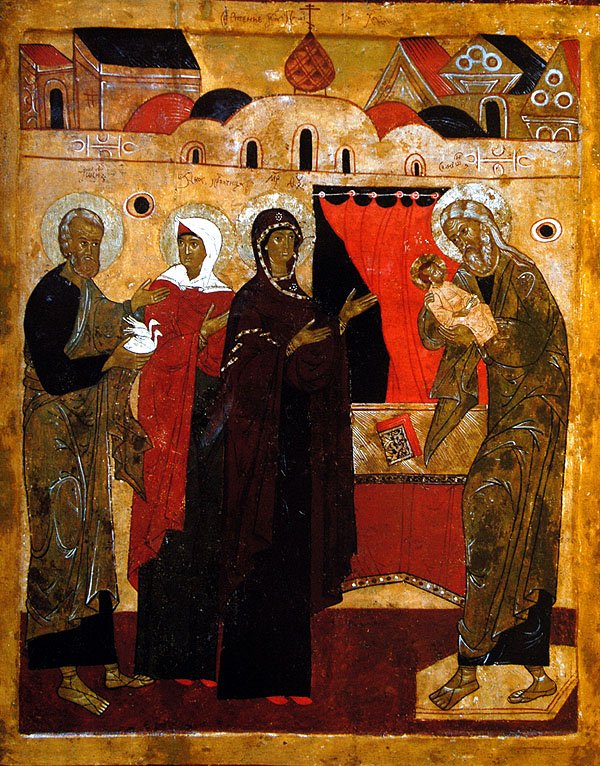
Afterfeast of the Meeting of our Lord in the Temple

Afterfeast of the Meeting of our Lord in the Temple

On this first day of the Afterfeast of the Meeting of the Lord, the Church commemorates the righteous Simeon and Anna the prophetess. The following words are ascribed to Christ in Ode 9 of the Canon: “I am not held by the Elder; it is I Who hold him, for he asks Me for forgiveness.”

Troparion - Tone 1

Hail, Virgin Theotokos, full of grace; / for from you has shone forth the Sun of Righteousness, Christ our God, / giving light to those in darkness. / Be glad, O righteous Elder; / for you received in your arms the Redeemer of our souls, / Who bestows upon us the resurrection.

Kontakion - Tone 1

By Your birth, You sanctified a virginal womb, / and fittingly You blessed Simeon’s hands, O Christ God; / even now You have saved us by anticipation. / Grant peace to Your faithful people whom You have loved, O only Lover of mankind.
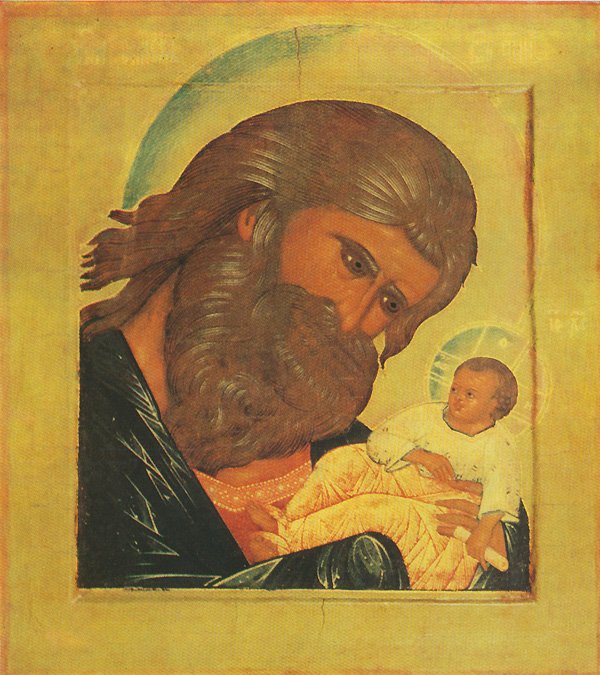
Holy, Righteous Simeon the God-Receiver

Holy, Righteous Simeon the God-Receiver

Righteous Simeon the God-Receiver was, according to the testimony of the holy Evangelist Luke, a just and devout man waiting for the consolation of Israel, and the Holy Spirit was upon him (Luke 2:25). God promised him that he would not die until the promised Messiah, Christ the Lord, came into the world. Righteous Simeon the God-Receiver was, according to the testimony of the holy Evangelist Luke, a just and devout man waiting for the consolation of Israel, and the Holy Spirit was upon him (Luke 2:25). God promised him that he would not die until the promised Messiah, Christ the Lord, came into the world. Ancient historians tell us that the Egyptian pharaoh Ptolemy II Philadelphus (285-247 B.C.) wished to include texts of Holy Scripture in the famous Library at Alexandria. He invited scholars from Jerusalem, and the Sanhedrin sent their wise men. The Righteous Simeon was one of the seventy scholars who came to Alexandria to translate the Holy Scriptures into Greek. The completed work was called “The Septuagint,” and is the version of the Old Testament used by the Orthodox Church. Saint Simeon was translating a book of the Prophet Isaiah, and read the words: “Behold, a virgin shall conceive in the womb, and shall bring forth a Son” (Is 7:14). He thought that “virgin” was inaccurate, and he wanted to correct the text to read “woman.” At that moment an angel appeared to him and held back his hand saying, “You shall see these words fulfilled. You shall not die until you behold Christ the Lord born of a pure and spotless Virgin.” From this day, Saint Simeon lived in expectation of the Promised Messiah. One day, the righteous Elder received a revelation from the Holy Spirit, and came to the Temple. It was on the very day (the fortieth after the Birth of Christ) when the All-Pure Virgin Mary and Saint Joseph had come to the Temple in order to perform the ritual prescribed by Jewish Law. When Saint Simeon beheld their arrival, the Holy Spirit revealed to him that the divine Child held by the All-Pure Virgin Mary was the Promised Messiah, the Savior of the world. The Elder took the Child in his arms and said, “Lord, now lettest Thou Thy servant depart in peace, according to Thy word, for mine eyes have seen Thy salvation, which Thou hast prepared before the face of all people, a light to enlighten the Gentiles, and the glory of Thy people Israel” (Luke 2:29-32). There is a Christian epigram (Number 46) in “The Greek Anthology” which is addressed to Saint Simeon. It tells the righteous Elder to receive the Child Who was born before Adam, and Who will deliver Simeon from this life and bring him to eternal life. A similar idea is expressed in the Aposticha (Slavic use) for the Forefeast of the Nativity of the Lord (December 24). There the Mother of God refers to her Son as “older than ancient Adam.” Simeon blessed the All-Pure Virgin and Saint Joseph, and turning to the Mother of God he said, “Behold, this child is set for the fall and rising again of many in Israel, and for a sign which shall be spoken against. Yea, a sword shall pierce through your own soul also, that the thoughts of many hearts may be revealed” (Luke 2:34-35). The holy Evangelist continues: “And there was one Anna, a prophetess, the daughter of Phanuel of the tribe of Aser. She was of a great age, and had lived with a husband for seven years from her virginity; and she was a widow of about eighty-four years, who did not leave the temple, but served God with fastings and prayers night and day. And coming at that very hour, also gave thanks to the Lord, and spoke of Him to all those who looked for redemption at Jerusalem” (Luke 2:36-38). The holy righteous Simeon the God-Receiver died at a great age (Tradition says he was 360). His holy relics were transferred to Constantinople in the sixth century. His grave was seen by the Russian pilgrim Saint Anthony, the future Archbishop of Novgorod (October 8) in 1200.

Troparion - Tone 4

Simeon the Elder is filled with joy today, / receiving into his arms the Eternal God as an infant. / Begging to be released from the bonds of the flesh he cries: / “My eyes have seen the salvation, / which You have prepared for all the nations to see!”

Kontakion - Tone 3

Let the godly pair be praised together: / Simeon the Righteous and Anna the Prophetess, well-pleasing to God. / They became witnesses of the Incarnate Lord / when they saw Him as an infant; / together they worshipped Him.
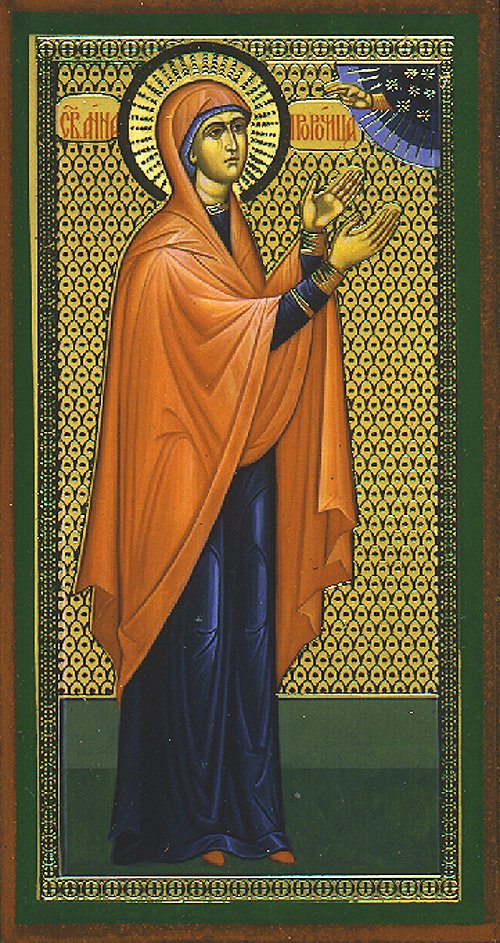
Holy, Righteous Anna the Prophetess

Holy, Righteous Anna the Prophetess

According to Saint Luke’s Gospel, “And there was one Anna, a prophetess, the daughter of Phanuel of the tribe of Aser. She was of a great age, and had lived with a husband for seven years from her virginity; and she was a widow of about eighty-four years, who did not leave the temple, but served God with fastings and prayers night and day. And According to Saint Luke’s Gospel, “And there was one Anna, a prophetess, the daughter of Phanuel of the tribe of Aser. She was of a great age, and had lived with a husband for seven years from her virginity; and she was a widow of about eighty-four years, who did not leave the temple, but served God with fastings and prayers night and day. And coming at that very hour, also gave thanks to the Lord, and spoke of Him to all those who looked for redemption at Jerusalem” (Luke 2:36-38).

Troparion

Let the godly pair be praised together: / Simeon the Righteous and Anna the Prophetess, well-pleasing to God. / They became witnesses of the Incarnate Lord / when they saw Him as an infant; / together they worshipped Him.
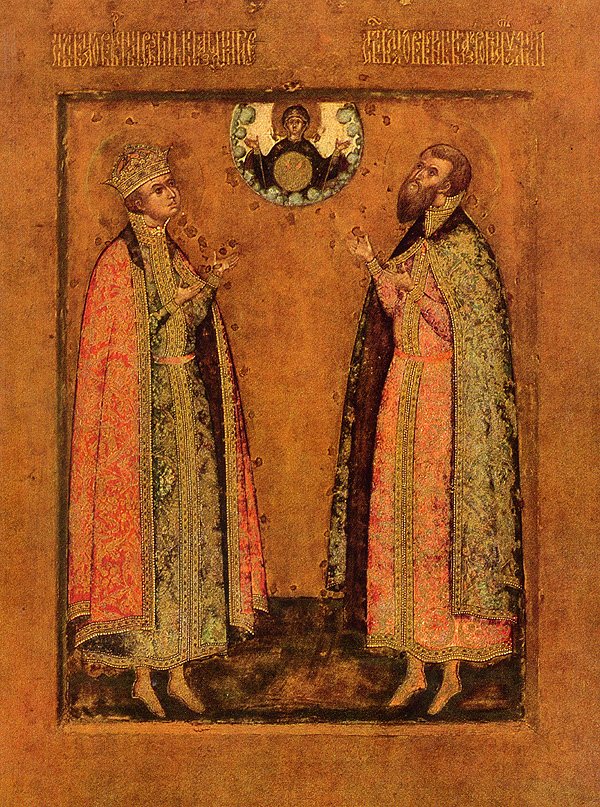
Right-Believing Prince Roman of Uglich

Right-Believing Prince Roman of Uglich

The Holy Right-Believing Prince Roman of Uglich, son of Prince Vladimir and Princess Photina of Uglich, and nephew of Saint Basil (Basilko) of Rostov (March 4), was born on October 1, 1235. Upon the death of his father (in 1248) and his older brother Andrew (in 1261), Saint Roman, at the age of twenty-six, took upon himself the governance of Uglich and became a father to his subjects. The Holy Right-Believing Prince Roman of Uglich, son of Prince Vladimir and Princess Photina of Uglich, and nephew of Saint Basil (Basilko) of Rostov (March 4), was born on October 1, 1235. Upon the death of his father (in 1248) and his older brother Andrew (in 1261), Saint Roman, at the age of twenty-six, took upon himself the governance of Uglich and became a father to his subjects. He established a poor-house and took in the destitute, who came to him from everywhere. In the principality he built fifteen more churches. Saint Roman was present every day at the divine services, and he often conversed with pious monks. After the death of his wife in 1280, he devoted himself entirely to ascetic exploits of fasting, prayer and works of righteousness. He built the city Romanov (now Tutaev) on the high bank of the Volga. The holy prince died peacefully on February 3, 1285 and was buried in the Church of the Transfiguration in Uglich. In 1486, the relics of Saint Roman were found to be incorrupt and were transferred into the new cathedral Church of the Transfiguration. In the year 1595 with the blessing of Patriarch Job in consequence of the fame concerning miracles the relics were witnessed to by the Metropolitan (later Patriarch) Saint Hermogenes (February 17), and Saint Roman was numbered among the saints. In 1609, the holy relics were burned along with the church during an invasion by the Poles.

Troparion - Tone 4

O right-believing Prince Roman, / from your youth you appeared as one chosen by God, / an invincible fortress of piety, you kept the faith, O blameless one, / you pleased God with your prayers, almsgiving, and fasting; / therefore, after your death the brightness of your life was revealed, / for you healed the ailments of the infirm who came to your holy tomb with faith. / Therefore, we cry to you: / “Rejoice, O God-pleaser Roman, / the glory and strength of the city of Uglich.”

Kontakion - Tone 8

O godly-wise, most blessed Prince Roman, / from your youth you appeared as a sanctified vessel1 chosen by God, / and now you pour forth many healings for us, and eradicate all diseases; / save your city of Uglich and protect all believers from invisible and visible enemies, with faith we pray: / “O Blessed Prince Roman, entreat Christ God for the salvation of our souls.”

Prophet Azariah

The Holy Prophet Azariah 1 was son of Oded (or Addo) and lived during the reign of King Asa (910-870 B.C. See 2 Chronicles 15:1) who was the son and successor of Abijah in the kingdom of Judah. Azariah came from the land of Sembatha and urged the people not to worship false “gods,” but to remain faithful to the Covenant with the Lord. As The Holy Prophet Azariah 1 was son of Oded (or Addo) and lived during the reign of King Asa (910-870 B.C. See 2 Chronicles 15:1) who was the son and successor of Abijah in the kingdom of Judah. Azariah came from the land of Sembatha and urged the people not to worship false “gods,” but to remain faithful to the Covenant with the Lord. Asa worshiped the one true God, and removed the altars of foreign “gods” from his land, tearing down the pillars and cutting down their sacred groves. He told the people to seek earnestly the God of their fathers, and to obey the Law and the Commandments. After removing the pagan altars and idols from all the cities of Judah he commanded his people to fortify their cities with walls and towers. King Asa had 300,000 warriors in Judah, and 280,000 mighty warriors in the land of Benjamin. According to the narratives of 2 Chronicles chapters 14 and 15, Zerah the Ethiopian 2 went out against Judah with a million men. Asa prayed fervently to God, asking that he might prevail, even against such overwhelming odds. The Lord smote the Ethiopians and Asa’s army pursued them and crushed them. He destroyed their towns and pillaged their cities, and then he returned to Jerusalem. After King Asa had won the victory, the Spirit of the Lord came upon Azariah. He went out to meet Asa and said, “Hear me, King Asa, and all the people of the tribes of Judah and Benjamin. The Lord will be with you as long as you are with Him, worshiping His name and observing His commandments. When you seek Him you will find Him; but if you forsake Him, He will also forsake you.” These words ought to be esteemed by every State and by all people. The Prophet Azariah reposed in peace and was buried in his field. In iconography he is depicted as an old man with curly hair. The name Azariah means “whom God helps.” 1 It is said that Azariah was actually son of Ananias (Tobit 5:12); perhaps an error for Zachariah the son of Addo (1 Esdras 6:1). 2 Zerah is a Hebrew name, and is not Ethiopian or Egyptian, as some have said.

Troparion - Tone 2

We celebrate the memory / of Your prophet Azariah, O Lord; / through him we entreat You, / save our souls.

Martyrs Papias, Diodorus and Claudianus, at Perge in Pamphylia

Saint Papias was martyred with Saints Claudianus and Diodorus at Perge, Pamphylia in 250.

Troparion - Tone 4

Your holy martyrs, O Lord, / through their sufferings have received incorruptible crowns from You, our God. / For having Your strength, they laid low their adversaries, / and shattered the powerless boldness of demons. / Through their intercessions, save our souls!

Saint Savva of Ioannina

It is not known where Saint Savva was born. He lived a life of asceticism in the Holy Monastery of the Honorable Forerunner on an island in the lake of Ioannina around the middle of the XV century. He was the Spiritual Father of Saints Nektarios (+ 1550) and Theophanes (+ 1544), who were descended from the distinguished Apsaras family of the Byzantine Empire. It is not known where Saint Savva was born. He lived a life of asceticism in the Holy Monastery of the Honorable Forerunner on an island in the lake of Ioannina around the middle of the XV century. He was the Spiritual Father of Saints Nektarios (+ 1550) and Theophanes (+ 1544), who were descended from the distinguished Apsaras family of the Byzantine Empire. They are commemorated jointly on May 17. Saint Savva was the son of an aristocratic family, and from an early age he loved the poverty of Jesus Christ. Until his last breath, he lived as a humble and poor hermit. No one ever saw him angry, judgmental, or as a person who remembered wrongs. His heart overflowed with humility, concerning which he himself said: “Humility is the solid and indestructible cornerstone upon which the spiritual life is built.” He was a hechycast, and his ascetical life was very strict. He prayed every night until morning. His food was plain, and he ate very little. No meat, fish, or cheese ever appeared on his table, and he never poured a drop of oil on his food. Saint Savva reposed peacefully in 1505. When he delivered his soul to the Lord, an inexpressible fragrance arose from the tabernacle of his body. The saint was buried in the monastery of Honorable Forerunner. A holy relic of the saint is kept and revered in the Roussanou Monastery of the Transfiguration at Meteora.

Troparion - Tone 8

By a flood of tears you made the desert fertile, / and your longing for God brought forth fruits in abundance. / By the radiance of miracles you illumined the whole universe! / O our holy father Savva, pray to Christ our God to save our souls!

Martyr Adrian at Caesarea, Cappadocia

Saint Adrian of Baneas of Caesarea in Cappadocia. suffered martyrdom under Governor Firmilianus. He was put to death by the sword, but entered into eternal life.

Troparion - Tone 4

Your holy martyr Adrian, O Lord, / through his suffering has received an incorruptible crown from You, our God. / For having Your strength, he laid low his adversaries, / and shattered the powerless boldness of demons. / Through his intercessions, save our souls!
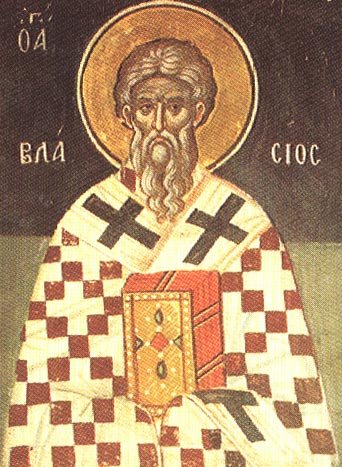
Martyr Eubulus at Caesarea, Cappadocia

Saint Eubulus, like Saint Adrian, was from Baneas, in Caesarea of Cappadocia. He went to Caesarea to visit Christians in prison, and was arrested by Governor Firmilianus. He was thrown to the wild beasts, and thereby received the crown of martyrdom.

Troparion - Tone 4

Your holy martyr Eubulus, O Lord, / through his suffering has received an incorruptible crown from You, our God. / For having Your strength, he laid low his adversaries, / and shattered the powerless boldness of demons. / Through his intercessions, save our souls!

Martyr Blaise of Caesarea, in Cappadocia

Martyr Blaise of Caesarea, in Cappadocia

Saint Blaise of Caesarea lived in the third century. He was from Caesarea in Cappadocia (Asia Minor) and was a shepherd. When a persecution against Christians began, Saint Blaise surrendered himself into the hands of the torturers. They subjected him to torture, and beat him with leather thongs, but the Lord healed his wounds. Saint Blaise of Caesarea lived in the third century. He was from Caesarea in Cappadocia (Asia Minor) and was a shepherd. When a persecution against Christians began, Saint Blaise surrendered himself into the hands of the torturers. They subjected him to torture, and beat him with leather thongs, but the Lord healed his wounds. They then threw Blaise into a cauldron of boiling water, but he remained there unharmed. The pagan soldiers, seeing this miracle, came to believe in Christ. The governor, wishing to show that the martyr remained unharmed because the water had cooled, jumped into the cauldron and died. Having brought many to faith in Christ, Saint Blaise peacefully surrendered his soul to God. They thrust the saint’s shepherd’s staff into the ground, and it grew up into a large tree, which covered with its branches a church built over his relics.

Troparion - Tone 4

Your holy martyr Blaise, O Lord, / through his suffering has received an incorruptible crown from You, our God. / For having Your strength, he laid low his adversaries, / and shattered the powerless boldness of demons. / Through his intercessions, save our souls!

Saint Simeon, Bishop of Polotsk and Tver

Saint Simeon, Bishop of Tver was descended from the Polotsk princes. He was the seventh bishop of Polotsk and the first bishop of the Tver diocese. The saint’s cathedra was first at Polotsk, but hostile attacks and conflicts with the Lithuanian princes, and the murder of the Polotsk prince (his relative) in 1263, compelled him to move to Tver (Prince Yaroslav Yaroslavich had become Great Prince of Russia, and he chose Tver as his ruling city). Saint Simeon, Bishop of Tver was descended from the Polotsk princes. He was the seventh bishop of Polotsk and the first bishop of the Tver diocese. The saint’s cathedra was first at Polotsk, but hostile attacks and conflicts with the Lithuanian princes, and the murder of the Polotsk prince (his relative) in 1263, compelled him to move to Tver (Prince Yaroslav Yaroslavich had become Great Prince of Russia, and he chose Tver as his ruling city). Saint Simeon was well-disposed and kind to the down-trodden and destitute, attentive to the monastic and priestly orders, and a zealous defender of truth. The Nikonov Chronicle relates that this holy bishop was “knowledgeable about medicine, and well versed in the books of Holy Scripture; he was a teacher, a virtuous man, concerned for the needy, widows and orphans, a defender of the down-trodden and deliverer of the oppressed.” History preserves for us a conversation of Saint Simeon with Prince Constantine of Polotsk who, wishing to make a jest about his court, asked the saint at supper: “Where shall the courts be in that world?” Simeon answered, “Those courts shall also be where the prince is.” The prince did not care for this, and he said, “A court might judge unjustly, and take bribes, or torture people, and is it I who do the harm?” The bishop explained to him, “If a prince is good and God-fearing, and is concerned for the people, and loves truth and he appoints good, God-fearing, intelligent and truth-loving men to his council, that prince shall be in Paradise and his court with him. If, however, a prince is without the fear of God, and is not concerned for Christians and does not think of orphans and widows, and if he appoints wicked counselors who lack integrity in order to bring him money, that prince shall be in Hell and his court with him.” Saint Simeon died on February 3, 1289.

Troparion - Tone 4

In truth you were revealed to your flock as a rule of faith, / an image of humility and a teacher of abstinence; / your humility exalted you; / your poverty enriched you. / Hierarch Father Simeon, / entreat Christ our God / that our souls may be saved.

Saint Jacob, Archbishop of Serbia

No information available at this time.

Troparion - Tone 4

In truth you were revealed to your flock as a rule of faith, / an image of humility and a teacher of abstinence; / your humility exalted you; / your poverty enriched you. / Hierarch Father Jacob, / entreat Christ our God / that our souls may be saved.
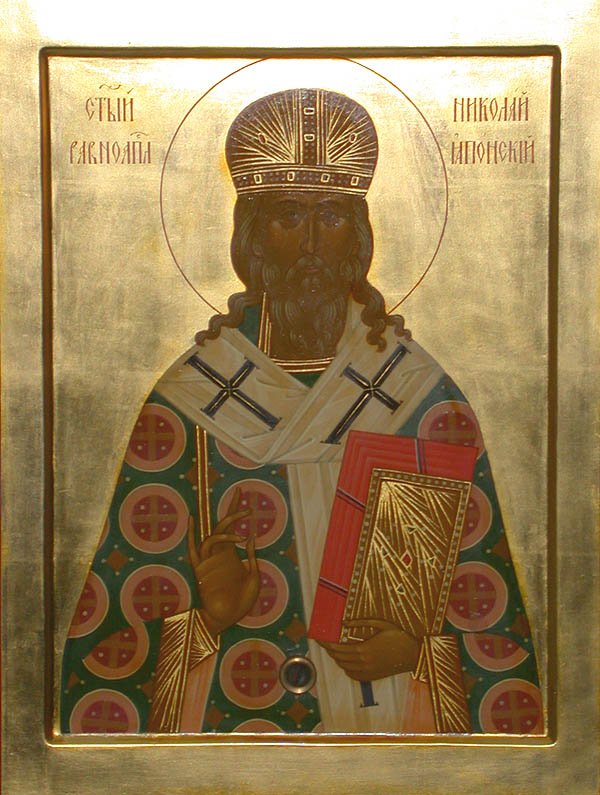
Saint Nicholas, Enlightener of Japan

Saint Nicholas, Enlightener of Japan

Saint Nicholas (Kasatkin) Equal of the Apostles, Bishop of the Russian Orthodox Church. Missionary, Founder of the Orthodox Church in Japan, honorary member of the Imperial Orthodox Palestine Society. (Name Day: May 9). Saint Nicholas (in the world John Kasatkin) was born on August 1,1836 in the village of Berezovsky Pogost, Belsky District, Smolensk Province into the family of a deacon. Saint Nicholas (Kasatkin) Equal of the Apostles, Bishop of the Russian Orthodox Church. Missionary, Founder of the Orthodox Church in Japan, honorary member of the Imperial Orthodox Palestine Society. (Name Day: May 9). Saint Nicholas (in the world John Kasatkin) was born on August 1,1836 in the village of Berezovsky Pogost, Belsky District, Smolensk Province into the family of a deacon. He graduated from the Belsk Theological School and the Smolensk Theological Seminary (1857). Among the best students he was recommended for the St. Petersburg Theological Academy, where he studied until 1860, when, at the personal request of Metropolitan Gregory (Postnikov) of St. Petersburg, he was given the post of rector of the church at the Russian consulate in the city of Hakodate (Japan), and was also awarded a Ph.D in Theology without having to submit an appropriate qualifying essay. On June 23, 1860, he was tonsured by the rector of the Academy, Bishop Nektarios (Nadezhdin), and named for Saint Nicholas of Myra. On June 30 he was ordained a Hieromonk. He arrived at Hakodate on July 2, 1861. During the first years of his stay in Japan, on his own he studied the Japanese language, culture and way of life. The first Japanese person to convert to Orthodoxy, despite the fact that conversion to Christianity was forbidden by law, was the adopted son of a Shinto cleric, Takuma Sawabe, a former samurai who was baptized with two other Japanese in the spring of 1868. During his half-century of service in Japan, Father Nicholas left only twice: in 1869-1870 and in 1879-1880. In 1870, through his intercession, a Russian ecclesiastical mission was opened in Japan with its center in Tokyo. On March 17, 1880, by the decision of the Holy Synod, he was assigned as vicar of Reval, then vicar of the Diocese of Riga. He was consecrated as a Bishop on March 30, 1880, in Holy Trinity Cathedral at Alexander Nevsky Lavra. In the course of his missionary work, Father Nicholas translated the Holy Scriptures and other liturgical books into Japanese; he established a theological seminary, six theological schools for girls and boys, a library, a shelter and other institutions. He published the Orthodox journal Church Herald in Japanese. According to his report to the Holy Synod, by the end of 1890 the Orthodox Church in Japan numbered 216 communities with 18,625 Christians in them. On March 8, 1891, the Cathedral of the Resurrection in Tokyo, called Nikorai-do (ニコライ堂) by the Japanese, was consecrated. During the Russo-Japanese War, he remained with his flock in Japan, but did not take part in any public services. because according to the rite of worship (and the blessing of Japanese Christians to pray for their country's victory over Russia. Bishop Nicholas said: "Today, according to custom, I serve in the cathedral, but from now on I will no longer take part in the public services of our church... Hitherto I have prayed for the prosperity and peace of the Empire of Japan. Now, since war has been declared between Japan and my country, I, as a Russian subject, cannot pray for Japan's victory over my own homeland. I also have obligations to my country, and that is why I will be happy to see that you fulfill your duty in relation to your country." When Russian prisoners of war began to arrive in Japan (their total number reached 73,000 people), Bishop Nicholas, with the consent of the Japanese government, formed the Society for the Spiritual Consolation of Prisoners of War. For their spiritual guidance, he selected five priests who spoke Russian. The prisoners were provided with icons and books. Vladyka repeatedly addressed them in writing (he himself was not allowed to see the prisoners). On March 24, 1906, he was elevated to the rank of Archbishop of Tokyo and All Japan. In the same year, the Kyoto Vicariate was founded. In 1911, when half a century of Saint Nicholas' s missionary work was completed, there were already 266 communities of the Japanese Orthodox Church, which included 33,017 Orthodox laymen. Archbishop Nicholas, the Enlightener of Japan, fell asleep in the Lord on February 3, 1912 at the age of 76, After the Hierarch's repose, the Japanese Emperor Meiji personally gave permission for him to be buried within the city, at the Yanaka cemetery. In Japan, Saint Nicholas is revered as a great righteous man and a special intercessor before the Lord. He was canonized on April 10, 1970, by the decision of the Holy Synod of the Moscow Patriarchate. A Service was composed for him by Metropolitan Nikodim (Rotov) of Leningrad and Novgorod, and published in 1978. Saint Nicholas is also commemorated on the Sunday before July 28 (Synaxis of the Smolensk Saints).

Troparion - Tone 4

You shared in the ways of the Apostles and sat upon their throne, / O faithful and divinely-wise servant of Christ, / chosen harp of the divine Spirit, vessel over­flowing with the love of Christ, / and Enlightener of Japan, O Holy Hierarch Nicholas, Equal of the Apostles, / entreat the Life-Giving Trinity on behalf of all your flock, and for the entire world.

Kontakion - Tone 4

As a colleague of the Apostles in their labors and rewards, / the Church honors you with love, O Holy Hierarch Nicholas Equal of the Apostles. / For having laid the foundation of the beginning of Orthodoxy in pagan Japan by your many deeds, / you increased the number of those who are saved; / and as is meet, after your death God received you into the abode of His Apostles. / Therefore we beseech you: / “Pray to the Lord that your work may continue to abide unshakably for eternity, / and that all those doomed to perdition may enter the bosom of the Orthodox Church, / for the peace of the world and for the salvation of our souls.”

Scripture Readings

Epistle

2 Peter 2:9-22

9 The Lord knoweth how to deliver the godly out of temptations, and to reserve the unjust unto the day of judgment to be punished:
10 But chiefly them that walk after the flesh in the lust of uncleanness, and despise government. Presumptuous are they, selfwilled, they are not afraid to speak evil of dignities.
11 Whereas angels, which are greater in power and might, bring not railing accusation against them before the Lord.
12 But these, as natural brute beasts, made to be taken and destroyed, speak evil of the things that they understand not; and shall utterly perish in their own corruption;
13 And shall receive the reward of unrighteousness, as they that count it pleasure to riot in the day time. Spots they are and blemishes, sporting themselves with their own deceivings while they feast with you;
14 Having eyes full of adultery, and that cannot cease from sin; beguiling unstable souls: an heart they have exercised with covetous practices; cursed children:
15 Which have forsaken the right way, and are gone astray, following the way of Balaam the son of Bosor, who loved the wages of unrighteousness;
16 But was rebuked for his iniquity: the dumb ass speaking with man’s voice forbad the madness of the prophet.
17 These are wells without water, clouds that are carried with a tempest; to whom the mist of darkness is reserved for ever.
18 For when they speak great swelling words of vanity, they allure through the lusts of the flesh, through much wantonness, those that were clean escaped from them who live in error.
19 While they promise them liberty, they themselves are the servants of corruption: for of whom a man is overcome, of the same is he brought in bondage.
20 For if after they have escaped the pollutions of the world through the knowledge of the Lord and Saviour Jesus Christ, they are again entangled therein, and overcome, the latter end is worse with them than the beginning.
21 For it had been better for them not to have known the way of righteousness, than, after they have known it, to turn from the holy commandment delivered unto them.
22 But it is happened unto them according to the true proverb, The dog is turned to his own vomit again; and the sow that was washed to her wallowing in the mire.

Gospel

Mark 13:14-23

14 But when ye shall see the abomination of desolation, spoken of by Daniel the prophet, standing where it ought not, (let him that readeth understand,) then let them that be in Judea flee to the mountains:
15 And let him that is on the housetop not go down into the house, neither enter therein, to take any thing out of his house:
16 And let him that is in the field not turn back again for to take up his garment.
17 But woe to them that are with child, and to them that give suck in those days!
18 And pray ye that your flight be not in the winter.
19 For in those days shall be affliction, such as was not from the beginning of the creation which God created unto this time, neither shall be.
20 And except that the Lord had shortened those days, no flesh should be saved: but for the elect’s sake, whom he hath chosen, he hath shortened the days.
21 And then if any man shall say to you, Lo, here is Christ; or, lo, he is there; believe him not:
22 For false Christs and false prophets shall rise, and shall shew signs and wonders, to seduce, if it were possible, even the elect.
23 But take ye heed: behold, I have foretold you all things.

Liturgical data sourced from OCA.org and orthocal.info