Fasting Rules

Meat allowed Meat Allowed
Fish allowed Fish Allowed
Dairy allowed Dairy Allowed
Oil allowed Oil Allowed
Wine allowed Wine Allowed

Saints & Commemorations
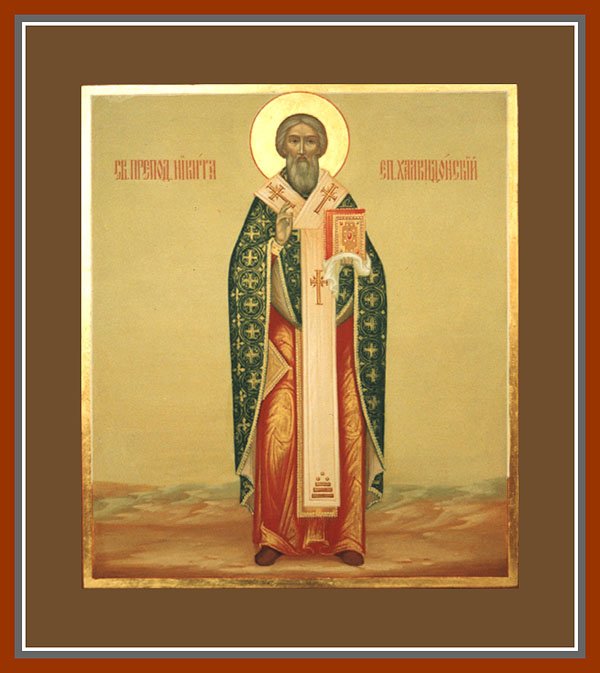
Saint Niketas, Bishop of Chalcedon

Saint Niketas, Bishop of Chalcedon

Saint Niketas (Nikḗtas), Bishop of Chalcedon, lived during the second half of the eighth century. For his God-pleasing life he was consecrated as Bishop of Chalcedon. Saint Niketas distinguished himself by his charity, he always helped the poor, he lodged travelers in his home, he cared for orphans and widows, and he interceded for those who had been wronged. Saint Niketas (Nikḗtas), Bishop of Chalcedon, lived during the second half of the eighth century. For his God-pleasing life he was consecrated as Bishop of Chalcedon. Saint Niketas distinguished himself by his charity, he always helped the poor, he lodged travelers in his home, he cared for orphans and widows, and he interceded for those who had been wronged. During the reign of the iconoclast Leo the Armenian (813-820), Saint Niketas bravely denounced the Iconoclast heresy and urged his flock to venerate the holy icons of Christ, the Theotokos, and the saints. Saint Niketas endured much suffering from the impious emperor and his like-minded cohorts. He was subjected to tortures and sent off to exile. The holy confessor Niketas died at the beginning of the ninth century. From his relics occurred many miracles of healing. The Canon of the service, written by the priest Joseph of Constantinople, also includes Saint Niketas’s brother, Saint Ignatius, among the saints.

Troparion - Tone 4

In truth you were revealed to your flock as a rule of faith, / an image of humility and a teacher of abstinence; / your humility exalted you; your poverty enriched you. / Hierarch Father Nicetas, / entreat Christ our God that our souls may be saved.

Kontakion - Tone 8

You shone with the splendor of your deeds, venerable Nicetas. / You became an heir to the throne of the apostles. / Completely filled, O Father, with the teachings of God, you shone like the sun upon your flock. / Therefore we cry out to you: “Rejoice, beauty of Chalcedon.”

Saint Ignatius the Wonderworker, Bishop of Rostov

Saint Ignatius was Bishop of Rostov, and shepherded his flock for twenty-six years. After his death on May 28, 1288, his body was brought to the church. Some people saw him leave his coffin, and float in the air above the church. He blessed the people and the city, then went back to his coffin. Many miracles took place at his grave.

Troparion - Tone 4

In truth you were revealed to your flock as a rule of faith, / an image of humility and a teacher of abstinence; / your humility exalted you; / your poverty enriched you. / Hierarch Father Ignatius, / entreat Christ our God / that our souls may be saved.
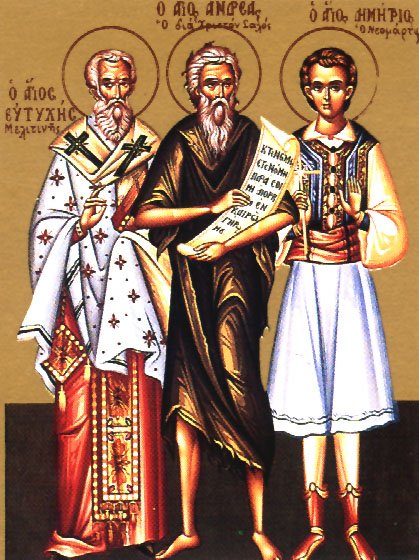
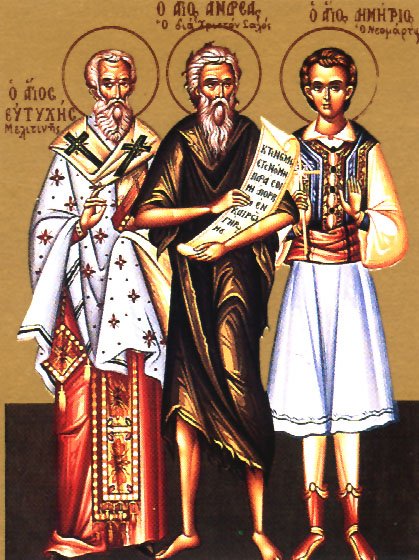
Saint Eutychius, Bishop of Melitene

Saint Eutychius, Bishop of Melitene

The Hieromartyr Eutychius, Bishop of Melitene, was a co-worker with the Holy Apostles, and he suffered for Christ in the city of Melitene during the first century.

Troparion - Tone 4

By sharing in the ways of the Apostles, / you became a successor to their throne. / Through the practice of virtue, you found the way to divine contemplation, / O inspired one of God; / by teaching the word of truth without error, / you defended the Faith, even to the shedding of your blood. / Hieromartyr Eutychius entreat Christ God to save our souls.

Martyr Heliconis of Thessalonica

The Holy Martyr Heliconis lived during the third century in the city of Thessalonica. Saint Heliconis arrived in the city of Corinth during a persecution of Christians, and urged the pagans to stop serving senseless idols and instead to worship the one true God, the Creator of the universe. She was arrested and brought before the governor Perinus, who vainly attempted to persuade the saint to offer sacrifice to idols, both by flattery and by threats. The Holy Martyr Heliconis lived during the third century in the city of Thessalonica. Saint Heliconis arrived in the city of Corinth during a persecution of Christians, and urged the pagans to stop serving senseless idols and instead to worship the one true God, the Creator of the universe. She was arrested and brought before the governor Perinus, who vainly attempted to persuade the saint to offer sacrifice to idols, both by flattery and by threats. The holy martyr was subjected to tortures, but she bravely endured them. Then they threw her into a hot furnace, but she emerged from it unharmed, because an angel of the Lord had cooled the flames. Thinking the saint was a sorceress, the governor invented new torments for her. They tore the skin from her head, and burned her breasts and head with fire. After halting the torture, the judge again attempted to urge Saint Heliconis to offer sacrifice to the idols, promising her honors and the title of priestess. The saint seemed to consent, and the pagan priests and the people led her to the pagan temple with the sounds of trumpet and drum. At the saint’s request, they left her there alone. Saint Heliconis, filled with heroic strength, cast down and smashed all the idols. When some time had passed, the pagan priests entered their temple. Seeing the destruction, they were even more enraged and cursed the holy virgin shouting, “Put the sorceress to death!” They beat the holy martyr, and then they threw her into prison, where she spent five days. Christ the Savior and the holy Archangels Michael and Gabriel appeared to the holy martyr in prison and healed her of her wounds. Finally, they sent the saint to be torn apart by wild beasts. They set loose three hungry lions upon her, but the beasts came up to the martyr meekly and lay down at her feet. The pagan mob shouted and cried, “Death to the sorceress.” But at this point the lions jumped out of the arena and pounced on the people, who fled in terror. Not knowing what else to do, the governor ordered that Saint Heliconis be beheaded. The saint went to execution with joy and heard a Voice summoning her to the heavenly habitations. She contested in the year 244, and her body was reverently buried by Christians.

Troparion - Tone 3

Your holy martyr Heliconis, O Lord, / through her sufferings has received an incorruptible crown from You, our God. / For having Your strength, she laid low her adversaries, / and shattered the powerless boldness of demons. / Through her intercessions, save our souls!
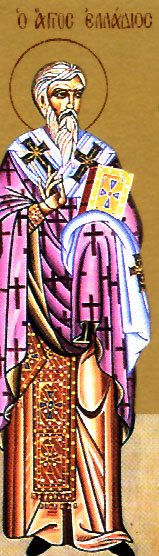
Hieromartyr Helladius, Bishop in the East

Hieromartyr Helladius, Bishop in the East

The Hieromartyr Helladius the Bishop was thrown into fire because of his faith in Christ, but he remained unharmed. He died as a martyr from the terrible beating inflicted upon him. In the Service to Saint Helladius it is said that the Lord Jesus Christ visited him in prison and healed him of his wounds. The Hieromartyr Helladius the Bishop was thrown into fire because of his faith in Christ, but he remained unharmed. He died as a martyr from the terrible beating inflicted upon him. In the Service to Saint Helladius it is said that the Lord Jesus Christ visited him in prison and healed him of his wounds. According to certain sources, Saint Helladius suffered under the Persians during their invasion into the Eastern part of the Roman Empire in the fourth century.

Troparion - Tone 4

By sharing in the ways of the Apostles, / you became a successor to their throne. / Through the practice of virtue, you found the way to divine contemplation, O inspired one of God; / by teaching the word of truth without error, you defended the Faith, / even to the shedding of your blood. / Hieromartyr Helladius, entreat Christ God to save our souls.

Saint Germanus, Bishop of Paris

Saint Germanus was born near Autun in 496. He was abbot of Saint Symphorian’s monastery at Autun, and was made Bishop of Paris around 536. He was tireless and courageous in his efforts to end civil strife and to restrain the viciousness of the Frankish kings, though he was not very successful in this. S Saint Germanus was born near Autun in 496. He was abbot of Saint Symphorian’s monastery at Autun, and was made Bishop of Paris around 536. He was tireless and courageous in his efforts to end civil strife and to restrain the viciousness of the Frankish kings, though he was not very successful in this. Saint Radegund (August 13) appealed to him for protection from her cruel husband King Chlotar I. Saint Germanus founded a monastery at Paris, and was buried in its church after his death in 576. This is the renowned monastery of Saint Germaine-des-Pres.

Troparion - Tone 7

Holy Germanus, as bishop of Paris you remained the monk you always were, / cherishing the beauty of the Liturgy and developing the cult of the saints. / Your miracles merited your veneration by young and old alike. / It was thus that you exercised a happy influence over the powerful, / and prevailed on them to free slaves and release prisoners. / And in the name of Christ, in the Church of Gaul you made concord and peace to reign.

Kontakion

Let us celebrate the father of the poor, the treasure of the needy, / the master of wisdom of kings and powerful men, / the unifier of the Church of Gaul, the unmercenary healer of all illnesses: / Saint Germanus, the founder of the abbey that still bears his name, / the crafter of peace, the exemplary pastor of Paris: / for he intercedes for our souls before Christ our God.

Saint Sophronius the Bulgarian

The Venerable Sophronios (Stephen in the world) was from the village of Penkovts (Пенкьовци) in Bulgaria, and lived during the XV and XVI centuries. He was a Hieromonk at the Penkovsky Monastery near Sofia. Learning that Turkish invaders were about to attack the monastery, he fled to Vlahia (in what is now Romania) and lived in a monastery near the Danube River. Later, The Venerable Sophronios (Stephen in the world) was from the village of Penkovts (Пенкьовци) in Bulgaria, and lived during the XV and XVI centuries. He was a Hieromonk at the Penkovsky Monastery near Sofia. Learning that Turkish invaders were about to attack the monastery, he fled to Vlahia (in what is now Romania) and lived in a monastery near the Danube River. Later, the Saint devoted himself to continual ascetical labors of fasting, vigil, and prayer, in the monastic community of Rusensk, which may have been founded by Saint Joachim (January 18), the Patriarch of Trnovo. Saint Sophronios reposed peacefully on May 28, 1510, and was known for his philanthropy and almsgiving. Some sources say that he was murdered by a servant, and that after three years his relics were found incorrupt.

Troparion - Tone 8

The image of God was truly preserved in you, O Father, / for you took up the Cross and followed Christ. / By so doing you taught us to disregard the flesh for it passes away / but to care instead for the soul, since it is immortal. / Therefore your spirit, venerable Sophronios, rejoices with the angels.
New Martyr Demetrius

New Martyr Demetrius

No information available at this time.

Troparion - Tone 3

Your holy martyr Demetrius, O Lord, / through his sufferings has received an incorruptible crown from You, our God. / For having Your strength, he laid low his adversaries, / and shattered the powerless boldness of demons. / Through his intercessions, save our souls!
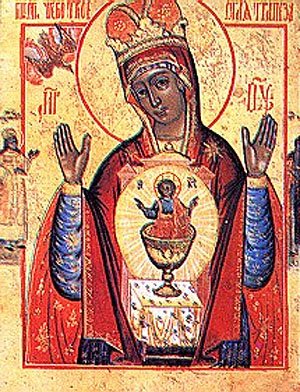
Icon of the Mother of God of Nicea

Icon of the Mother of God of Nicea

The Nicaea Icon of the Mother of God appeared in the city of Nicaea in Asia Minor in the year 304, as the city was under siege. One of the soldiers, whose name was Constantine, saw the Icon of the Theotokos and threw a stone at it. Then he began to trample it underfoot. That night, the Mother of God appeared in a dream to the soldier who had perpetrated this sacrilege and said: "You have insulted me most grievously, and it shall lead to your death." The following day, during the battle, the impious man was struck in the head with a stone and fell down dead. The Nicaea Icon of the Mother of God appeared in the city of Nicaea in Asia Minor in the year 304, as the city was under siege. One of the soldiers, whose name was Constantine, saw the Icon of the Theotokos and threw a stone at it. Then he began to trample it underfoot. That night, the Mother of God appeared in a dream to the soldier who had perpetrated this sacrilege and said: "You have insulted me most grievously, and it shall lead to your death." The following day, during the battle, the impious man was struck in the head with a stone and fell down dead. This event was mentioned by the Fathers of the First Ecumenical Council in 325, and they ordained that the following hymn, "Your womb has become a Holy Table, which held the Heavenly Bread. Those who partake of it shall not die, as the Nourisher of all has said, O Theotokos." should be sung before the Nicaea Icon of the Mother of God. Christ stated that He is the Bread of Life which had come down from Heaven when He spoke to the crowd at Capernaum (John 6:50). This Theotokion is sung at Mid-Pentecost during Ode 5 of the Second Canon (Tone 8), which was composed by Saint Andrew of Crete. In some Orthodox Prayer Books, it is one of the Prayers After the Evening Meal. The Nicaea Icon is very similar in appearance to the “Inexhaustible Chalice” Icon (May 5).

Troparion - Tone 4

(Tone 8 in Greek usage) Your womb has become a Holy Table, which held the Heavenly Bread. / Those who partake of it shall not die, / as the Nourisher of all has said, O Theotokos.

Saint William of Gellone

No information available at this time.

Troparion - Tone 8

In you, O Father, was preserved with exactness what was according to the image; / for you took up the Cross and followed Christ. / By so doing, you taught us to disregard the flesh, for it passes away; / but to care for the soul, since it is immortal. / Therefore, O Venerable William, your spirit rejoices with the Angels.

Kontakion - Tone 2

Finding delight in abstinence, / you subdued the desires of the flesh. / Revealed as one nurtured in the Faith, / you blossomed like the Tree of Life in Paradise, / O Venerable Father William.

Scripture Readings

Epistle

Acts 25:13-19

13 And after certain days king Agrippa and Bernice came unto Cesarea to salute Festus.
14 And when they had been there many days, Festus declared Paul’s cause unto the king, saying, There is a certain man left in bonds by Felix:
15 About whom, when I was at Jerusalem, the chief priests and the elders of the Jews informed me, desiring to have judgment against him.
16 To whom I answered, It is not the manner of the Romans to deliver any man to die, before that he which is accused have the accusers face to face, and have licence to answer for himself concerning the crime laid against him.
17 Therefore, when they were come hither, without any delay on the morrow I sat on the judgment seat, and commanded the man to be brought forth.
18 Against whom when the accusers stood up, they brought none accusation of such things as I supposed:
19 But had certain questions against him of their own superstition, and of one Jesus, which was dead, whom Paul affirmed to be alive.

Gospel

John 16:23-33

23 And in that day ye shall ask me nothing. Verily, verily, I say unto you, Whatsoever ye shall ask the Father in my name, he will give it you.
24 Hitherto have ye asked nothing in my name: ask, and ye shall receive, that your joy may be full.
25 These things have I spoken unto you in proverbs: but the time cometh, when I shall no more speak unto you in proverbs, but I shall shew you plainly of the Father.
26 At that day ye shall ask in my name: and I say not unto you, that I will pray the Father for you:
27 For the Father himself loveth you, because ye have loved me, and have believed that I came out from God.
28 I came forth from the Father, and am come into the world: again, I leave the world, and go to the Father.
29 His disciples said unto him, Lo, now speakest thou plainly, and speakest no proverb.
30 Now are we sure that thou knowest all things, and needest not that any man should ask thee: by this we believe that thou camest forth from God.
31 Jesus answered them, Do ye now believe?
32 Behold, the hour cometh, yea, is now come, that ye shall be scattered, every man to his own, and shall leave me alone: and yet I am not alone, because the Father is with me.
33 These things I have spoken unto you, that in me ye might have peace. In the world ye shall have tribulation: but be of good cheer; I have overcome the world.

Liturgical data sourced from OCA.org and orthocal.info