Fasting Rules

Meat allowed Meat Allowed
Fish allowed Fish Allowed
Dairy allowed Dairy Allowed
Oil allowed Oil Allowed
Wine allowed Wine Allowed

Saints & Commemorations
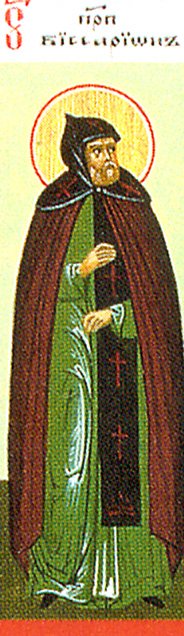
Venerable Bessarion, Wonderworker of Egypt

Venerable Bessarion, Wonderworker of Egypt

Saint Bessarion, Wonderworker of Egypt was an Egyptian. He was baptized while still in his youth, and he led a strict life, striving to preserve the grace given him during Baptism. Seeking to become more closely acquainted with the monastic life, he journeyed to the holy places. He was in Jerusalem, he visited Saint Gerasimus (March 4) in the Jordanian wilderness, he viewed other desert monasteries, and assimilated all the rules of monastic life. Saint Bessarion, Wonderworker of Egypt was an Egyptian. He was baptized while still in his youth, and he led a strict life, striving to preserve the grace given him during Baptism. Seeking to become more closely acquainted with the monastic life, he journeyed to the holy places. He was in Jerusalem, he visited Saint Gerasimus (March 4) in the Jordanian wilderness, he viewed other desert monasteries, and assimilated all the rules of monastic life. Upon his return, he received monastic tonsure and became a disciple of Saint Isidore of Pelusium (February 4). Saint Bessarion took a vow of silence, and partook of food only once a week. Sometimes he remained without food or drink for forty days. Once, the saint stood motionless for forty days and forty nights without food or sleep, immersed in prayer. Saint Bessarion received from God the gift of wonderworking. When his disciple was very thirsty, he sweetened bitter water. By his prayer the Lord sent rain upon the earth, and he could cross a river as if on dry land. With a single word he cast out devils, but he did this privately to avoid glory. His humility was so great that once, when a priest ordered someone from the skete to leave church for having fallen into sin, Bessarion also went with him saying, “I am a sinner, too.” Saint Bessarion slept only while standing or sitting. A large portion of his life was spent under the open sky in prayerful solitude. He peacefully departed to the Lord in his old age.

Troparion - Tone 4

O God of our Fathers, / always act with kindness towards us; / take not Your mercy from us, / but guide our lives in peace / through the prayers of the venerable Bessarion and Hilarion the New.

Kontakion - Tone 2

You imitated the powers on high, venerable Bessarion, / living by example the life of those who take flight. / Led by steadfast desire to the heavenly good things of Christ the King, / you put passing things from your mind and attained to Him. / Entreat Him without ceasing for the sake of us all!

Leavetaking of Pentecost

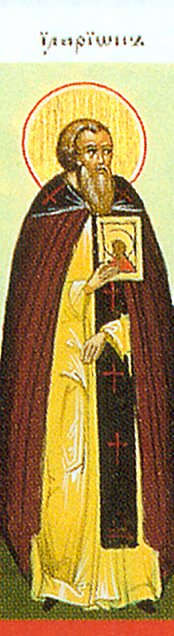
Venerable Hilarion the New, Abbot of the Dalmatian Monastery

Venerable Hilarion the New, Abbot of the Dalmatian Monastery

He was born in 775 in Cappadocia. He became abbot of the Monastery of Dalmatus, where he fervently defended the icons against the attacks of the Emperor Leo the Armenian. He was exiled twice, first by Leo, then by Theophilus, but was finally freed by the Empress Theodora and again became abbot of the monastery, where he served until his repose.

Troparion - Tone 4

O God of our Fathers, / always act with kindness towards us; / take not Your mercy from us, / but guide our lives in peace / through the prayers of the venerable Bessarion and Hilarion the New.

Kontakion - Tone 2

You imitated the powers on high, venerable Hilarion, / living by example the life of those who take flight. / Led by steadfast desire to the heavenly good things of Christ the King, / you put passing things from your mind and attained to Him. / Entreat Him without ceasing for the sake of us all!

Saint Jonah, Bishop of Perm

Saint Jonah, Bishop of Great Perm, was successor to Saint Pitirim, Bishop of Perm (August 19), who was murdered by the Vogulani in 1455. In the year 1462 Saint Jonah converted the inhabitants of Great Perm to Christ. He journeyed throughout his extensive diocese to spread and consolidate the Christian Faith. The saint reposed on June 6, 1470 and was buried at Ust-Vym at the Annunciation cathedral.

Troparion - Tone 4

In truth you were revealed to your flock as a rule of faith, / an image of humility and a teacher of abstinence; / your humility exalted you; / your poverty enriched you. / Hierarch Father Jonah, / entreat Christ our God / that our souls may be saved.
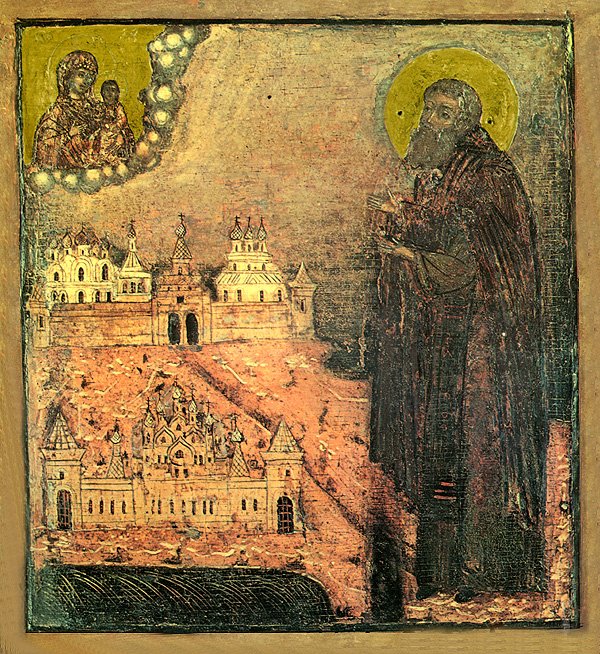
Venerable Paisius, Abbot of Uglich

Venerable Paisius, Abbot of Uglich

Saint Paisius of Uglich was igumen of the Protection monastery, near Uglich. He was born in the Tver district near the city of Kashin, and he was a nephew of Saint Macarius of Kalyazin (March 17). Saint Paisius entered his uncle’s monastery after the death of his parents, when he was just an eleven-year-old child. U Saint Paisius of Uglich was igumen of the Protection monastery, near Uglich. He was born in the Tver district near the city of Kashin, and he was a nephew of Saint Macarius of Kalyazin (March 17). Saint Paisius entered his uncle’s monastery after the death of his parents, when he was just an eleven-year-old child. Under his uncle’s guidance, Saint Paisius led a monastic life of obedience, fasting and prayer, and he was put to work copying soul-saving books. “A man wondrous of spirit, famed teacher of holiness and most astounding wonderworker, he founded (in 1464) the cenobitic Protection monastery three versts from Uglich at the wish of Prince Andrew, and he was chosen igumen.” Saint Paisius was also “founder and organizer of the holy Nikolsky Grekhozaruchnya monastery in 1489.” Struggling at the Protection monastery, Saint Paisius lived into old age and died on June 6, 1504. His relics, glorified by miracles, rest beneath a crypt in the Protection monastery. Saint Paisius is also commemorated on January 8.

Troparion - Tone 8

By a flood of tears you made the desert fertile, / and your longing for God brought forth fruits in abundance. / By the radiance of miracles you illumined the whole universe! / O our holy father Paisius, pray to Christ our God to save our souls!

Our Holy Mothers the Martyrs Archelaïs, Thekla and Susanna (293)
“As pure and virginal nuns, they lived the ascetic life in an unknown monastery near Rome. When a persecution of Christians arose under the wicked Emperor Diocletian, they fled to Campania and settled near the town of Nola. Their holy life could not be concealed, and people from nearby began to come to them for counsel, instruction and help in various trials and sicknesses, and they were finally seized by the pagans and taken for trial. T “As pure and virginal nuns, they lived the ascetic life in an unknown monastery near Rome. When a persecution of Christians arose under the wicked Emperor Diocletian, they fled to Campania and settled near the town of Nola. Their holy life could not be concealed, and people from nearby began to come to them for counsel, instruction and help in various trials and sicknesses, and they were finally seized by the pagans and taken for trial. They publicly and freely confessed their faith in Christ. When the judge, Leontius, questioned the holy Archelaïs about the Christian faith, she replied: ‘It is by the power of Christ that I overcome the power of the devil and teach the people understanding and knowledge of the one, true God. By the name of my Lord Jesus Christ, the only-begotten Son of God, it is given that, through me His servant, the sick find healing.’ All three maidens were whipped, flogged with heavy staves, left to languish in prison and finally beheaded. When they were led out to the scaffold, angels appeared to them, which were seen by some of the executioners and inspired such fear in them that they dared not lift up their swords against the holy maidens. They, however, urged the executioners to finish their task. And thus, as lambs, were they beheaded in the year 293, and went to the Kingdom of Christ to rest in eternity and delight in beholding the face of God.” (Prologue)
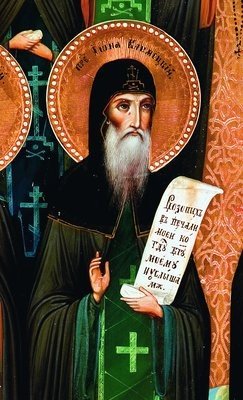
Venerable Jonah, Abbot of Klimetzk

Venerable Jonah, Abbot of Klimetzk

Saint Jonah of Klimetzk, in the world John, became a monk, and founded the Klimetzk Trinity Monastery in fulfillment of a vow. In 1490 he had been caught by a storm on Lake Onega. When there was no hope for survival, John cried out to the Lord, entreating Him to preserve his life so he might repent and serve God. Saint Jonah of Klimetzk, in the world John, became a monk, and founded the Klimetzk Trinity Monastery in fulfillment of a vow. In 1490 he had been caught by a storm on Lake Onega. When there was no hope for survival, John cried out to the Lord, entreating Him to preserve his life so he might repent and serve God. The boat was thrown onto a sandbar by the waves. There he heard the voice of the Lord commanding him to found a monastery in honor of the Life-Creating Trinity. He miraculously discovered a holy icon on a juniper tree. The saint fulfilled the will of the Lord and built a monastery with two churches, one dedicated to the Most Holy Trinity and the other in honor of Saint Nicholas, protector of those who sail and those who travel. Refusing the rank of igumen, Saint Jonah remained a simple monk at the monastery. He died on June 6, 1534. A church was built over his relics, and was dedicated to Saints Zachariah and Elizabeth.

Troparion - Tone 8

By a flood of tears you made the desert fertile, / and your longing for God brought forth fruits in abundance. / By the radiance of miracles you illumined the whole universe! / O our holy father Jonah, pray to Christ our God to save our souls!

Virgin Martyrs Archelais, Thekla, and Susanna, at Salerno

The Holy Virgin Martyrs Archelais, Thekla and Susanna sought salvation in a small monastery near Rome. During the persecution by Diocletian (284-305), the holy virgins dressed themselves in men’s clothing, cut their hair and went to the Italian province of Campania. Settling in a remote area, they continued to pursue an ascetical life of fasting and prayer. T The Holy Virgin Martyrs Archelais, Thekla and Susanna sought salvation in a small monastery near Rome. During the persecution by Diocletian (284-305), the holy virgins dressed themselves in men’s clothing, cut their hair and went to the Italian province of Campania. Settling in a remote area, they continued to pursue an ascetical life of fasting and prayer. They received the gift of healing from God, and treated the local inhabitants, converting many pagans to Christ. When the governor of the district heard about them, he had them brought to Salerno. He threatened Saint Archelais with torture and death if she did not offer sacrifice to idols. With firm hope in the Lord, the saint refused to submit to the command, and she denounced the folly of worshipping soulless statues. Then the governor ordered the saint to be torn apart by hungry lions, but the beasts meekly lay at her feet. In a rage the governor ordered the lions to be killed, and locked the holy virgins in prison. In the morning, having suspended Saint Archelais, the torturers began to rake her with iron utensils and pour hot tar on the wounds. The saint prayed even more loudly, and suddenly a light shone over her and a voice was heard, “Fear not, for I am with you.” The saint was defended by the power of God. When they wanted to crush her with an immense stone, an angel pushed it to the other side, and it crushed the torturers instead. A judge ordered soldiers to behead the holy virgins, but the soldiers did not dare to put their hands upon the saints. Then Saints Archelais, Thekla and Susanna said to the soldiers, “If you do not fulfill the command, you shall have no respect from us.” The holy martyrs were beheaded in 293. In the nineteenth century, Saint Susanna appeared to a disciple of Elder Boniface saying, “We must pray to God with the soul, the mind, and the heart.” She is described as a maiden of untold beauty, with a soft, pleasant voice.

Troparion - Tone 1

As reasonable lambs, you were guided by Christ, the Chief Shepherd, / along the path of martyrdom. / You finished your course and kept the faith; / therefore, honored Archelais, Thekla, and Susanna, / with joyful hearts, we magnify Christ today, as we honor your holy memory!
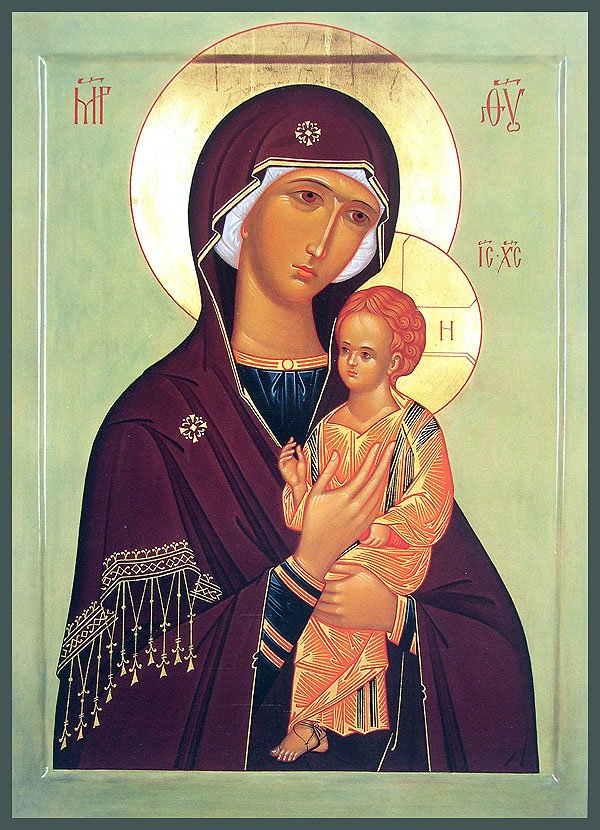
Pimenov Icon of the Mother of God

Pimenov Icon of the Mother of God

The first mention of the Pimenov Icon dates from the second half of the XVI century. There is a brief chronicler's note for the years 1404-1407 in the book Grades of Royal Genealogy: "A miracle occurred in Moscow at the home of the Tyutryum family, where myron flowed from the icons of the Mother of God and of Saint Nicholas the Wonderworker." This is supplemented by the following information: "Metropolitan Pimen of all Russia brought the miraculous Icon from Constantinople, and for many years it remained in the great cathedral church." "Tyutryum, a certain well-known merchant, begged the clergy of the cathedral to bring the Icon to his house and serve a Moleben, as is the custom; for because of his faith, he had a great desire to see the Icon of the Mother of God in his home." This Hodēgḗtria Icon is associated with Metropolitan Pimen of Kiev and all Rus who, according to tradition, brought the wonderworking Icon from Constantinople in 1381 or 1386. At The first mention of the Pimenov Icon dates from the second half of the XVI century. There is a brief chronicler's note for the years 1404-1407 in the book Grades of Royal Genealogy: "A miracle occurred in Moscow at the home of the Tyutryum family, where myron flowed from the icons of the Mother of God and of Saint Nicholas the Wonderworker." This is supplemented by the following information: "Metropolitan Pimen of all Russia brought the miraculous Icon from Constantinople, and for many years it remained in the great cathedral church." "Tyutryum, a certain well-known merchant, begged the clergy of the cathedral to bring the Icon to his house and serve a Moleben, as is the custom; for because of his faith, he had a great desire to see the Icon of the Mother of God in his home." This Hodēgḗtria Icon is associated with Metropolitan Pimen of Kiev and all Rus who, according to tradition, brought the wonderworking Icon from Constantinople in 1381 or 1386. At first, the Icon was in the altar of the Dormition cathedral of the Moscow Kremlin, then it was moved to the Annunciation cathedral. Until 1918 it was in the Peace Chamber of the Kremlin palace, and then in the State Historical Museum, from which it was transferred to the Tretyakov Gallery in 1930. Metropolitan Pimen (circa 1304 - September 11, 1389) was known as Pimen the Greek, and served as Metropolitan of Moscow (technically Metropolitan of Kiev and All Rus') from 1382–1384. He is not numbered among the Saints, however.

Troparion - Tone 4

Let us sinners and wretched people now run most earnestly to the Theotokos, / and let us fall down in repentance, crying out from the depths of our souls: / O Sovereign Lady, have compassion on us, / help us, and come quickly, for we are perishing from a multitude of transgressions. / Do not turn your servants away empty-handed, for we have you as our only hope.

Kontakion - Tone 6

Steadfast protectress of Christians, / most constant advocate before the Creator, / do not despise the voices of us who have sinned, / but in your goodness come speedily to help us, who cry to you in faith. / Hasten to intercede for us, O Theotokos, / and speedily make supplication, for you always protect those who honor you.
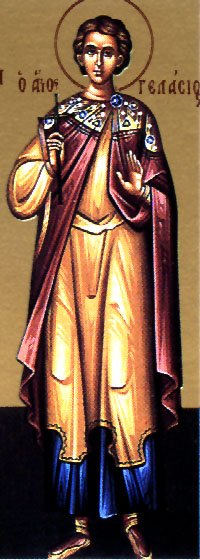
Martyr Gelasius

Martyr Gelasius

Saint Gelasius, the holy martyr of Christ, lived during a time of fierce persecution. He gave away all his property and possessions to the poor, put on a long white garment, and went to visit those who were facing martyrdom. Since these Christians had been tortured in various ways, Saint Gelasius kissed their wounds and encouraged them to remain steadfast in their confession of Christ. Saint Gelasius, the holy martyr of Christ, lived during a time of fierce persecution. He gave away all his property and possessions to the poor, put on a long white garment, and went to visit those who were facing martyrdom. Since these Christians had been tortured in various ways, Saint Gelasius kissed their wounds and encouraged them to remain steadfast in their confession of Christ. When the pagans saw him doing this they seized him and brought him before their ruler. When he was questioned he proclaimed Christ as the true God, denouncing the idols as deaf and inanimate objects. The governor mocked him and had him flogged. Finally, he ordered that the saint’s head be cut off, and so Saint Gelasius received the unfading crown of martyrdom from the Lord. This saint should not be confused with the third century saint Gelasius (one of the ten martyrs of Crete, commemorated on December 23), Saint Gelasius of Palestine (December 31), nor with Saint Gerasimus the actor of Heliopolis (February 27).

Troparion - Tone 3

Your holy martyr Gelasius, O Lord, / through his sufferings has received an incorruptible crown from You, our God. / For having Your strength, he laid low his adversaries, / and shattered the powerless boldness of demons. / Through his intercessions, save our souls!

Scripture Readings

Epistle

Romans 1:7-12

7 To all that be in Rome, beloved of God, called to be saints: Grace to you and peace from God our Father, and the Lord Jesus Christ.
8 First, I thank my God through Jesus Christ for you all, that your faith is spoken of throughout the whole world.
9 For God is my witness, whom I serve with my spirit in the gospel of his Son, that without ceasing I make mention of you always in my prayers;
10 Making request, if by any means now at length I might have a prosperous journey by the will of God to come unto you.
11 For I long to see you, that I may impart unto you some spiritual gift, to the end ye may be established;
12 That is, that I may be comforted together with you by the mutual faith both of you and me.

Gospel

Matthew 5:42-48

42 Give to him that asketh thee, and from him that would borrow of thee turn not thou away.
43 Ye have heard that it hath been said, Thou shalt love thy neighbour, and hate thine enemy.
44 But I say unto you, Love your enemies, bless them that curse you, do good to them that hate you, and pray for them which despitefully use you, and persecute you;
45 That ye may be the children of your Father which is in heaven: for he maketh his sun to rise on the evil and on the good, and sendeth rain on the just and on the unjust.
46 For if ye love them which love you, what reward have ye? do not even the publicans the same?
47 And if ye salute your brethren only, what do ye more than others? do not even the publicans so?
48 Be ye therefore perfect, even as your Father which is in heaven is perfect.

Liturgical data sourced from OCA.org and orthocal.info